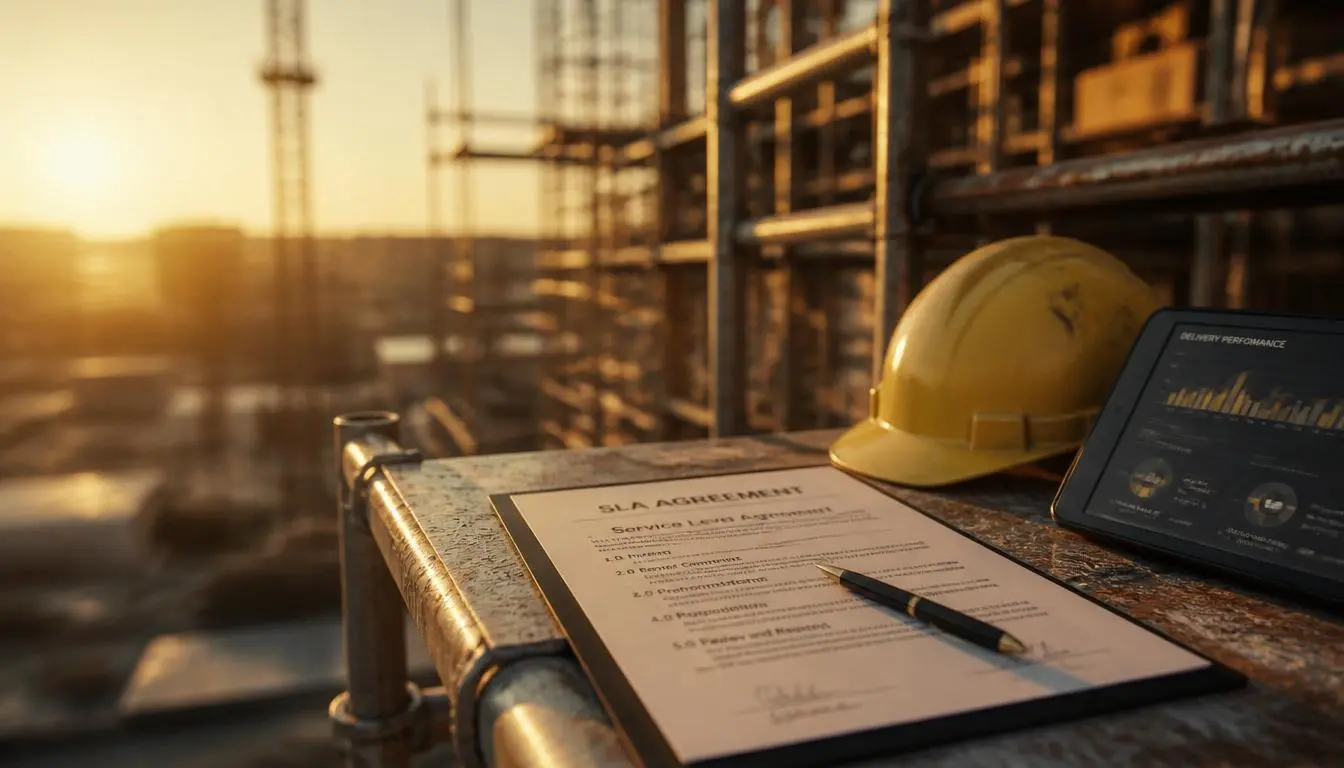

Scaffolding Rental Agreement Terms: Complete Guide for Contractors & Builders
Starting a construction or renovation project without a proper contract is like building on an uninspected foundation, it exposes you to immense financial and operational risks. Before a single steel pipe or frame reaches your construction site, one critical document dictates your operational timeline, safety standards, and project budget: your scaffolding rental contract. Many builders focus solely on the daily or monthly hire rate, only to be surprised later by unannounced transportation fees, dispute charges over missing pins, or punitive extension costs. Understanding your Scaffolding Rental Agreement Terms in Bangalore is vital to protecting your profit margins and project schedules. Whether you are a commercial construction contractor, a builder managing multi-story developments, a site engineer overseeing daily safety, or a homeowner handling a residential renovation, clear contractual terms prevent costly disputes. In this comprehensive guide, we unpack every clause you must review before signing, ensuring your material handling, payment terms, and site safety remain seamless from delivery to final handover. For reliable site support and transparent contract terms, Sri Kanakadri Scaffolding provides industry-leading rental solutions tailored to project requirements across Bangalore. Planning to rent scaffolding? Call Sri Kanakadri Scaffolding at +91 9113276916 to discuss your project requirements. 1-Minute Summary Verify Equipment Lists Lock in Schedule Dates Clarify Payment Schedules Determine Transport Logistics Review Extension Rates Inspect Material Conditions Establish Safety Obligations Put Everything in Writing What Is a Scaffolding Rental Agreement? A scaffolding rental agreement is a legal contract defining the relationship between the equipment supplier and the hirer. It governs equipment ownership, usage guidelines, financial obligations, and risk allocation throughout the hire period. Why Is a Written Scaffolding Rental Agreement Important? Relying on informal arrangements or standard delivery chits often leads to unnecessary friction. A formal written agreement serves key operational functions: Defines Clear Boundaries: Establishes explicit legal responsibilities between supplier and renter. Prevents Financial Disputes: Clearly records payment schedules, interest on overdue amounts, and deposit refund rules. Fixes Rental Durations: Prevents sudden equipment recalls while setting predictable extension terms. Establishes Quality Control: Records pre-existing material conditions and sets standards for return conditions. Provides Legal Protection: Serves as a binding evidentiary document if legal or insurance disputes arise on-site. Who Should Use a Scaffolding Rental Agreement? Construction Contractors: Require predictable rental cycles, guaranteed material availability, and clear damage-liability thresholds. Builders & Developers: Need long-term contracts suitable for large, multi-stage commercial or high-rise residential projects. Site Engineers & Project Managers: Require clear timelines for site delivery, joint material counting, safety standards, and return handovers. Homeowners & Renovation Contractors: Need straightforward terms free of hidden transport fees or unexpected extension charges. What Should Be Included in a Scaffolding Rental Agreement? To safeguard your project against unexpected costs, evaluate these core clauses within your agreement: ┌─────────────────────────────────────────────────────────┐ │ SCAFFOLDING RENTAL AGREEMENT │ ├─────────────────────────────────────────────────────────┤ │ 1. Material Description & Itemized Quantities │ │ 2. Billing Duration & Minimum Rental Period │ │ 3. Fee Structure, Taxes & Payment Schedule │ │ 4. Security Deposit Terms & Refund Conditions │ │ 5. Transportation, Loading & Site Access Duties │ │ 6. Damage, Loss & Component Return Protocols │ └─────────────────────────────────────────────────────────┘ 1. Description and Quantity of Scaffolding The agreement must explicitly list all equipment being delivered. Rather than accepting a generic description like “1 Set Scaffolding,” insist on an itemized breakdown including: Scaffolding Type: H-frame, Cuplock, Tubular, or Modular systems. Specific Quantities: Exact count of vertical standards, horizontal ledgers, diagonal braces, base plates, and joint pins. Platform Accessories: Steel walk boards, toe boards, guardrails, and access ladders. 2. Rental Period and Start Date Define when the billing clock starts. Does it begin when the material leaves the yard, or when it arrives and is unloaded at your site? Ensure the contract explicitly details: Official rental commencement and expected completion dates. Stated minimum rental period (e.g., 30-day minimum charge). Formal extension notification requirements and daily/weekly pro-rata rates. 3. Rental Charges and Payment Schedule Financial terms should be transparent. The contract must outline: Base hire rates (charged per piece, per sq. ft., or per set per month). Agreed advance payment amounts and recurring billing cycles. Applicable GST or local commercial taxes. Late payment penalties or interest rates applied to overdue invoices. 4. Security Deposit Suppliers generally require a security deposit to hedge against unreturned or severely damaged items. Ensure the contract defines the exact timeline for deposit refunds post-return. Clarify conditions under which deductions may occur. Always complete a joint sign-off on material condition at delivery to protect your deposit. 5. Delivery, Loading, and Transportation Freight disputes are a common source of unexpected jobsite costs. Your agreement must clearly state: Designated site delivery location and secondary offloading zones. Party responsible for hiring transport vehicles, freight costs, and driver allowances. Loading and unloading labor responsibilities at both the supplier yard and the construction site. Access logistics for restricted urban areas or tight residential lanes. 6. Damage, Loss, and Missing Components Equipment wears down over time, but contractors should not be billed for normal operational wear. Normal Wear vs. Damage: Scaffolding paint chipping or minor surface oxidation is normal wear; bent pipes, cut frames, or weld breaks count as damage. Missing Components: Small items like joint pins, couplers, and base plates are frequently lost. The contract should list a pre-agreed replacement cost per item rather than inflated penalty fees. Component-Wise Handover: Avoid signing generalized return slips. Always demand a component-wise count upon delivery and return to ensure accurate records. What Are the Terms and Conditions for Renting Scaffolding? Operational logistics change during construction. Your contract should accommodate schedule changes through clear terms: RENTAL STAGES │ ┌───────────────────────────┼───────────────────────────┐ ▼ ▼ ▼ ┌───────────┐ ┌───────────┐ ┌───────────┐ │ Extension │ │ Return │ │ Doff/Dism │ └─────┬─────┘ └─────┬─────┘ └─────┬─────┘ │ │ │ ▼ ▼ ▼ Advance Notice Notice Protocol Final Count & & Pro-Rata Billing & Pro-Rata Credit Joint Inspection Rental Extension Terms Weather delays and labor shortages often push project timelines out. Ensure your contract allows seamless extensions: Notify the supplier in writing 3–7 days before your original agreement expires. Verify whether extension periods