News & Article

Cantilever Scaffolding Hire: Accessing Hard-to-Reach Infrastructure Areas Safely

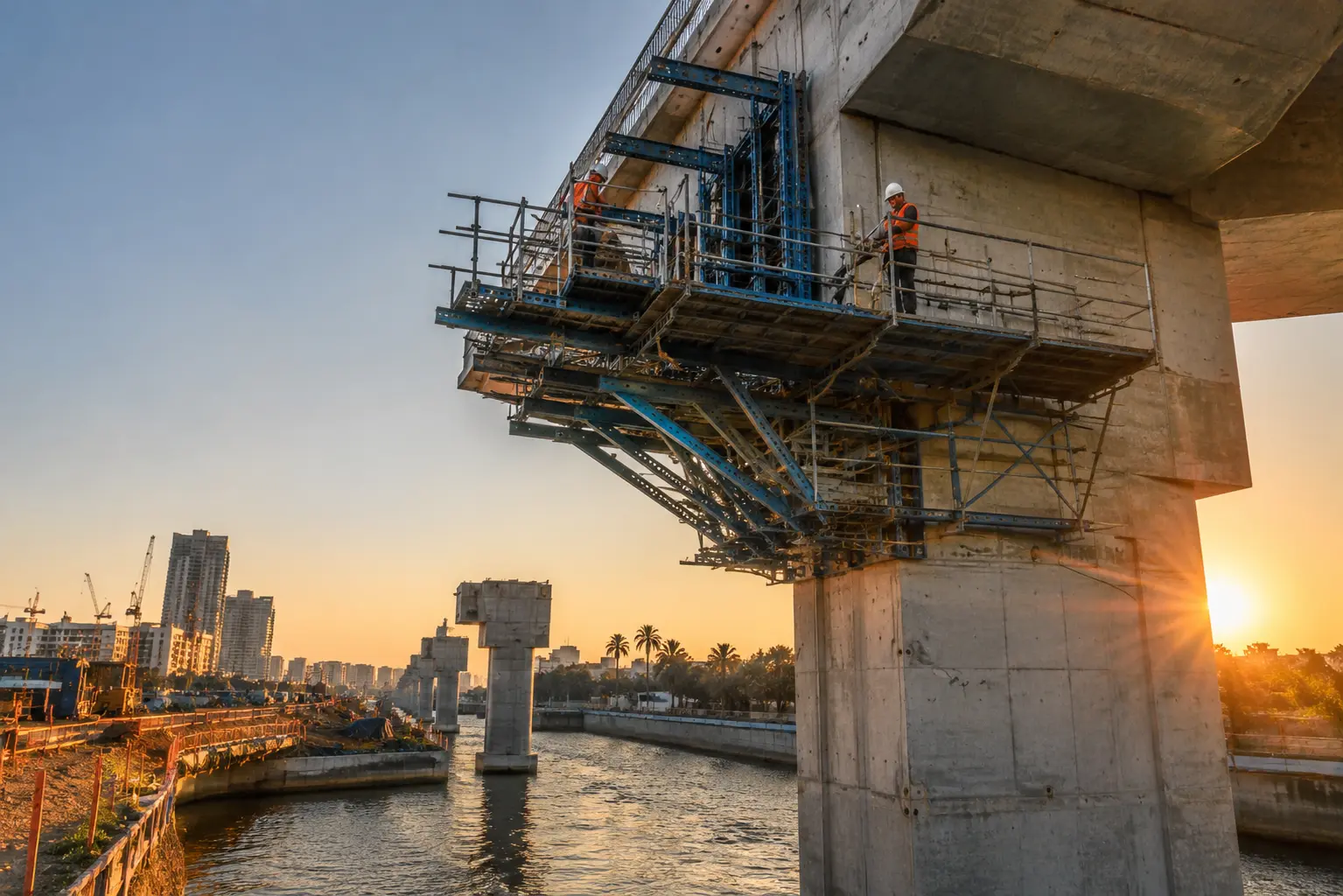
In heavy civil engineering, you often run into “impossible” spots where ground-based support just isn’t an option. Whether you’re working on a bridge girder hanging over a canal or a building facade jutting out over a busy road, a standard tower won’t cut it. This is where cantilever scaffolding hire Bangalore becomes the only real solution for complex infrastructure. By using “needles” or outrigger beams that project outward from a stable structure, cantilever systems let your crew work safely over obstacles without needing a single pole on the ground. This guide breaks down the engineering and safety protocols needed to handle these high-stakes setups without the usual fluff. In a fast-growing city like Bangalore, you need solutions that don’t choke traffic or wreck existing landscapes. Cantilevered systems solve this by shifting the weight from the ground to a secure host structure. We’ll look at how these systems work, the 2026 safety mandates you need to follow, and how to keep your site compliant while reaching those tough zones. Key Insight: Cantilever scaffolding isn’t a “one-size-fits-all” product; it’s an engineered solution. Its success depends entirely on the strength of the anchor point and the math behind the load. The Engineering of Projection: What is Cantilever Scaffolding? Cantilever scaffolding is a specialized setup that projects horizontally from a building. Unlike towers that sit on a base, a cantilevered scaffold rental relies on the building itself for support. The platform sits on horizontal beams called needles that are anchored into the floor or wall. This creates a protruding scaffold that reaches high-altitude areas where ground support is blocked by water, fragile roofs, or heavy traffic. The core idea is “leveraged support.” By securing one end of a beam inside the structure, the other end sticks out to create a stable walkway. This is why choosing your structural support is so important; the anchor points have to handle both the downward weight of the crew and the upward “uplift” force inside the building. Needle Scaffolding vs. Outrigger Systems: Key Differences When looking for needle scaffolding services, you need to know the two ways we project a platform. Both do the same job but fit different scenarios: Needle Scaffolding: The most common form. It involves passing a beam (the needle) through a hole in the wall or a window. The beam is anchored to the floor slab inside, providing a rock-solid fulcrum for the platform outside. Outrigger Systems: These are used when you can’t pierce the wall. Instead, the outrigger beams are secured to a base frame or floor and extended over a ledge. You’ll see this often in modern glass-facade buildings where drilling through the exterior is forbidden. Key Insight: Outrigger systems are faster to set up, but needle scaffolding usually handles heavier loads for serious infrastructure repairs. When to Choose Cantilever Systems for Infrastructure Projects Standard scaffolding needs a flat, solid foundation, but real-world infrastructure is rarely that clean. You should choose scaffolding for hard to reach areas when ground-level obstacles make a traditional tower dangerous or impossible. For example, if you’re doing bridge maintenance over a river or a railway, you can’t exactly put poles in the water or on the tracks. These systems are also perfect for urban congestion. In a crowded site, the ground might be packed with utilities, machines, or pedestrians. By projecting the scaffold from an upper floor, you bypass the mess entirely and keep the site moving. Overcoming Road & Water Obstacles in Bangalore’s Expansion For Bangalore infrastructure, cantilevered solutions are non-negotiable. We often see a need for cantilever scaffolding for bridge repair on flyovers crossing drainage canals. In these spots, the soft soil makes ground support a recipe for disaster. As Metro projects move over existing roads, keeping road clearance open is a legal must. Cantilevered platforms let workers reach pier caps without stopping the traffic below. It’s the only way to balance fast development with daily city logistics. Key Insight: Use a cantilever system when the cost of clearing the ground (time, permits, or safety risks) is higher than the cost of an overhead solution. The Physics of Balance: Load Calculations & Anchor Points Success in cantilever scaffolding design isn’t about guessing; it’s pure physics. Because these structures hang in open space, they act like giant levers. Every bit of weight on the outside creates an “uplift” force inside. Managing the gap between the fulcrum point (the building’s edge) and the structural anchorage is the secret to a safe site. To keep things from tipping, we use a strict safety factor of at least $4:1$. This means the internal tie-down force must be four times the maximum weight expected on the platform. We calculate the “moment of force” by multiplying the weight by its distance from the edge. In high-rises, we often use mechanical bolts that tie into the concrete slab rather than just using dead weights. This ensures the anchor can handle “uplift” during high winds or accidental overloading. Key Insight: The “invisible” part of the scaffold inside the building is the most critical. If the internal anchor doesn’t meet the safety ratio, the whole thing is a hazard. 2026 Safety Mandates for Protruding Scaffolding Structures By 2026, the rules for working at height in India have become much tighter. For safety standards for cantilevered scaffolds 2026, “good enough” won’t pass inspection. The updated IS 3696 compliance now focuses heavily on how beams are secured. One big change: makeshift counterweights are banned. You can no longer use sandbags, bricks, or water tanks. Today, you must use certified, heavy-duty iron weights or mechanical floor anchors that can be verified with a torque wrench. Inspectors now look for “positive locking” at the anchor point. The beam must be bolted or clamped to the structure so it can’t move an inch. Also, a structural engineer must certify that the building can handle the force at the fulcrum. If the concrete is old or weak, the setup is a no-go until you add a secondary support frame.

Read More »

Suspended Scaffolding for IT Parks: Safe Facade Maintenance in Whitefield & E-City

Keeping the glass-and-steel facades of Whitefield and Electronic City IT parks in top shape is a major logistical hurdle. Traditional ground-based towers often block entrances and parking, creating headaches for facility teams. This is why suspended scaffolding for IT parks Bangalore has become the go-to standard. By using high-altitude cradles, facility managers can handle glass cleaning and repairs with zero disruption to daily tech operations. Whether it’s window washing, panel replacement, or structural checks, a suspended platform (or swing stage) offers the reach needed for high-rise work without the massive footprint of a standard tower. In this guide, we look at why specialized facade maintenance scaffolding is the best choice for Bangalore’s corporate corridors and how the latest 2026 safety mandates in Bangalore are changing the way we work at height. Key Insight: For an IT park, the goal is zero-disruption. A suspended system keeps the exterior world-class while employees enter and exit the building completely unaffected.   The High-Rise Challenge: Why IT Parks Need Specialized Access Bangalore’s IT parks are busy ecosystems. When it comes to IT park facility management, using traditional ground-up scaffolding for glass cleaning is usually impractical. A massive cage of steel tubes surrounding a building looks unprofessional and creates physical barriers that block fire exits and main entrances. The move toward facade maintenance scaffolding that hangs from the roof solves this bottleneck. High-rise buildings in tech hubs often have complex designs with setbacks that are hard to reach from the ground. Specialized high-rise access solutions, like suspended platforms, allow crews to reach the exact point of repair quickly without taking up any ground space. In a premium corporate setting, you can’t trade accessibility for maintenance. A suspended cradle can be deployed or retracted in a fraction of the time it takes to build a tower, ensuring the building looks its best for global clients while the work stays mostly out of sight. Spotlight on Tech Hubs: Maintenance in Whitefield & Electronic City Whitefield and Electronic City (E-City) are the hearts of Bangalore’s tech growth. However, these areas have unique environmental hurdles. Unlike the city center, E-City tech parks are often in open areas where the wind has a direct path. For Electronic City maintenance teams, managing a suspended platform 20 floors up requires serious planning. Wind speeds at the top of a high-rise are much higher than at ground level. This “wind tunnel” effect can cause cradles to sway, risking damage to the glass or the safety of the workers. This is why high-rise scaffolding in these zones must be handled by specialists who understand the local wind patterns. Wind Loads and Rigging Challenges When deploying high-rise scaffolding Bangalore solutions, wind load calculations are vital. Standard systems often fail at height because they don’t account for lateral forces. Ensuring safety compliance means calculating the exact weight and surface area of the cradle to prevent swinging. Roof rigging is also a technical challenge. Many IT parks have rooftop gardens or solar panels that limit where we can place counterweights. We use specialized outrigger beams and anchors to keep the rig rock-solid without causing glass protection issues or structural damage to the building’s waterproofing.   Cradle Systems (TSP) vs. Traditional Scaffolding Choosing between a cradle system rental Bangalore and traditional scaffolding comes down to site footprint. While traditional scaffolding is good for new construction, maintenance for an operational IT park needs a Temporary Suspended Platform (TSP) or swing stage. Zero Ground Footprint: Unlike traditional scaffolding, a cradle hangs from the roof, keeping walkways and exits clear. Cost-Efficiency: You save on labor and transport because you aren’t hauling thousands of pipes. Speed: A platform can move vertically to the 18th floor in minutes for an immediate inspection. Key Insight: You aren’t just renting metal; you are renting time and space. Cradle systems keep your ground-level operations 100% functional.   2026 Safety Standards for Suspended Platforms in Bangalore In 2026, suspended scaffolding safety standards in Bangalore are mandatory legal requirements. Understanding these rules is the first step in protecting your building’s reputation and your workers’ lives. IS 3696 Compliance: Every platform must have a redundant wire rope safety system. If the main cable fails, an automatic “fall arrester” locks the secondary rope. Active Safety: Every worker must use a certified fall arrest system with a double-lanyard for “100% tie-off.” Weather Protocols: Work must stop immediately if wind speeds in open corridors exceed 50 km/h.   Vetting a Partner for IT Park Tenders When selecting a partner for a suspended platform rental Bangalore, the focus must be on safety ratings, not just the lowest bid. A qualified partner should provide: Maintenance Logs: Proof that motors and safety locks have been tested under load within the last six months. Operator Training: Certified operators who know emergency descent procedures. Site-Specific Planning: A rigging plan that avoids sensitive rooftop equipment. At Sri Kanakadri Scaffolding, we treat IT park maintenance with the same technical rigor as a major public project. This is a core part of our approach to advanced infrastructure scaffolding Bangalore. Common Safety Mistakes to Avoid The most dangerous moments usually come from “process failure” rather than the gear itself. Avoiding scaffolding safety mistakes means respecting the physics of the rig: Improper Counterweights: Never use sandbags or water tanks. Use only certified, heavy-duty iron weights. Poor Rigging: Failing to secure tie-backs to a structural part of the building can lead to uncontrollable swinging. Skipping Inspections: Wire ropes rarely snap without warning; they show signs of fraying first. Use a daily scaffolding inspection checklist to prevent roof anchor failure.   FAQs: Managing High-Rise Facade Maintenance What is the typical suspended scaffolding rental cost in Bangalore? The suspended scaffolding rental cost depends on platform length and building height. Rentals are usually monthly, and you should ensure the quote includes safety audits and mobilization. Are there specific operator requirements? Yes. Operators must be certified for the specific cradle model and trained in “Soft Skills” to maintain privacy near office windows in a professional IT

Read More »

Heavy-Duty Shoring Scaffolding: Engineering Flyover and Bridge Support in Bangalore

In a city as busy as Bangalore, building a flyover isn’t just about pouring concrete it’s about managing extreme pressure in very tight spaces. When you’re constructing massive elevated corridors or Metro lines, you aren’t just looking for a way to get workers up high; you’re looking for a temporary foundation that can hold thousands of tons. This is where heavy-duty shoring for bridges Bangalore becomes the most important part of your site. Think of “falsework” or shoring as the invisible skeleton that holds a bridge together until it can stand on its own. While standard scaffolding is for people, shoring is for weight. This guide breaks down the technical side of high-load systems, from managing ground vibrations to getting the “camber” just right, ensuring your project meets the latest 2026 safety mandates in Bangalore. Key Insight: Shoring is the temporary foundation of your project. In infrastructure, the support system is just as vital as the final bridge. Shoring vs. Scaffolding: The Critical Distinction in Bridge Engineering To a passerby, the metal frames under a new flyover might look like regular scaffolding. But for an engineer, the difference is night and day. Scaffolding is a tool for access it’s a safe place for people to stand. Heavy-duty shoring solutions, however, are structural supports. The job of shoring is to carry the “dead load” (the massive weight of wet concrete and steel) and the “live load” (machinery and workers) until the structure cures. Because of this, heavy-duty shoring for bridges Bangalore must be incredibly rigid. Unlike access scaffolding, which has a bit of “give,” shoring cannot budge. For example, when setting up bridge deck support, we often use cuplock scaffolding systems. Its node-locking system is much stronger than standard frames. Even a few millimeters of shift during a concrete pour can cause cracks or ruin the alignment of a bridge span. We treat these systems as engineered structures, not just ladders. Why Bangalore’s Flyovers Demand Specialized Support Systems Bangalore is a city of “tight corners.” When building flyover scaffolding support in crowded spots like Vijayanagar or the Outer Ring Road, we are fighting for every inch. We have to build high and strong while keeping traffic moving below. Providing scaffolding for bridge construction Bangalore is one of the toughest urban challenges because the support needs to be both massive in strength and compact in size. Shoring for Cast-in-Situ vs. Pre-Cast Girders The type of bridge shoring systems you need depends on your build method: Cast-in-situ: You pour the concrete on-site. The shoring must stay perfectly still for days under the full weight of the wet pour. Pre-cast: You lift finished segments into place. Here, the girder support must handle the sudden, heavy force of a segment being lowered by a launcher. Precision Leveling: Managing Deflection and Camber One of the hardest parts of high-load shoring scaffolding is getting the “camber” right. Bridges are designed with a tiny upward curve so they level out once cars start driving on them. We control this using screw jack adjustment. By fine-tuning the jacks at the base and the top, we maintain total camber control, ensuring the bridge doesn’t sag or “deflect” while drying. The Engineering Core: Load Calculations and Safety Factors In bridge work, we don’t guess we do the math. When supporting a 50-ton span over a Bangalore street, understanding the advanced infrastructure scaffolding Bangalore requirements is your only real safety net. We calculate the dead load and live load long before the first pipe is delivered. To stay safe, we follow BIS 2750 standards and use a safety factor of 4:1. This means the system is built to hold four times the weight we actually expect. This buffer is critical for handling sudden wind or the vibration from a concrete pump. This technical focus is what separates pro-grade shoring from basic rental gear. 2026 Safety Protocols for High-Altitude Shoring Safety at 15 meters in the air requires more than just a helmet. In 2026, shoring safety standards in Bangalore have become much tougher. A big concern here is traffic vibration. Thousands of vehicles passing by can slowly loosen standard couplers. Our protocols include: Torque Checks: We check critical junctions every 48 hours to ensure nothing has rattled loose. Integrated Fall Protection: Guardrails and harness points are built directly into the shoring. Daily Inspections: A certified officer must check for ground settlement to ensure the heavy weight hasn’t pushed the base plates into the soil. Using a daily scaffolding inspection checklist is the best way to keep up with current safety mandates. FAQs: Engineering Queries for Bridge Shoring 1. Why does bridge shoring cost more than regular scaffolding? Shoring is a load-bearing engineered system. It uses higher-grade steel and precision parts like heavy U-heads. It’s an investment in structural failure prevention. 2. How do you prevent failure during a pour? We start with a pre-pour audit, checking that every standard is “plumb” (straight). We monitor the shoring constantly during the pour. If it moves even a hair, we stop and adjust. 3. Is your gear compliant with BIS 2750? Yes. For bridge shoring rentals Bangalore, compliance isn’t optional. It ensures the steel won’t buckle under massive axial loads. 4. What are the logistics for a large rental? Because Bangalore sites are narrow, we use “just-in-time” delivery. We bring only what is needed for the current span to keep the site clear and safe. Action Steps: Executing a Zero-Failure Shoring Plan Structural Audit: Have a shoring engineering partner review your blueprints early. Identify soil stability issues or traffic clearance needs. Load Testing: Once the shoring is up, verify it against your weight calculations. This is vital on uneven terrain. Safety Loop: Use a daily scaffolding inspection checklist and stick to the official 2026 safety mandates in Bangalore. At Sri Kanakadri Scaffolding, we handle the heavy-duty needs of Bangalore’s growth. Whether it’s a Metro station or a new flyover, we have the inventory and expertise to keep your project on solid ground. Common Mistakes

Read More »

Advanced Infrastructure Scaffolding: Engineering Solutions for Bangalore’s Mega Projects

Bangalore’s skyline in 2026 is moving fast. From the massive stretches of the Peripheral Ring Road to the high-tech station boxes of Namma Metro Phase 3, construction here has shifted from simple building to complex engineering. For project managers on the ground, the priority isn’t just renting pipes; it’s finding infrastructure scaffolding Bangalore solutions that can handle massive weight and strict safety rules. This guide looks at the engineering behind these mega projects. We’ll see how specialized shoring and customized scaffolding design keep our flyovers and metro lines moving. Whether you are dealing with a government tender or a multi-crore civil project, getting these technical details right is the only way to keep your site safe and efficient. Infrastructure vs. Commercial Scaffolding: Defining the Engineering Gap Standard scaffolding for an apartment block is mostly for worker access—giving people a place to stand while they paint or fix windows. Infrastructure projects are different. In civil engineering, the scaffold often acts as the primary structural support. This is the “Engineering Gap.” If you’re working on a high-rise in Vijayanagar, you need people to move easily. But if you’re supporting a metro girder, you need heavy-duty shoring that won’t budge under pressure. Infrastructure scaffolding solutions have to handle “live loads” that standard systems can’t touch. When you’re casting a bridge deck, the scaffold holds the weight of wet concrete, steel rebar, and the heavy vibration of machinery all at once. This is why most big projects have moved away from basic H-frames to cuplock scaffolding systems. Their unique locking mechanism makes them much stiffer and better at spreading weight evenly. Unlike smaller sites, mega projects also need a lot of paperwork. You can’t just “put up” a scaffold; you have to assemble an engineered system backed by civil engineering specs and load certificates. In this world, a 1% error in where a pole is placed can cause a structural tilt. Key Insight: In infrastructure, the scaffold is the temporary foundation of the building. Picking a system based on “access” rather than “load capacity” is a dangerous mistake. Solving Complexity for Bangalore’s Elevated Corridors and Flyovers Bangalore is currently being rebuilt with elevated corridors that run for kilometers through some of the busiest parts of the city. Providing scaffolding for bridge construction Bangalore is a massive challenge because you’re often working right over moving traffic or very close to homes. Heavy-Duty Shoring Systems for Bridge Deck Support The hardest part of building a bridge is casting the deck. You need heavy-duty shoring systems India that can hold the “dead load” of concrete until it dries and becomes strong enough to stand on its own. For projects near the Vijayanagar elevated roads, we use high-tensile steel and girder support frames. Everything has to be perfectly level so the weight is spread across the whole span. For these roads, the shoring also has to fight sideways forces, especially when heavy pre-cast segments are being moved into place. We use special bracing and adjustable screw jacks to keep everything steady. This precision prevents the bridge deck from sagging or cracking while it cures. Precision Scaffolding for Namma Metro Rail Expansion The Namma Metro Phase 3 expansion has even stricter rules. As metro rail scaffolding contractors, we focus on station-box builds and tunnel portal support. Being near live metro tracks means everything has to be vibration-resistant. If a train rumbles past and a bolt loosens, the whole structure could be at risk. We use rigid portal frames and locking systems that stay put even with constant ground shakes. Whether we are supporting a station facade or helping with overhead electrical lines, the scaffolding plan is built right into the Metro’s master blueprints. This keeps the project on track without breaking the 2026 safety mandates in Bangalore. Key Insight: Flyover and Metro jobs need a “dynamic safety strategy.” You have to plan for traffic, ground shakes, and massive weight all at the same time. The Math Behind the Metal: High-Load Capacity and Stress Analysis In this type of engineering, weight matters more than height. If you’re supporting a 50-tonne bridge piece, you need mathematical proof that your scaffold will hold. High-load capacity scaffolding starts with a stress analysis, where we test every part of the system against its Safe Working Load (SWL). To meet BIS 2750 compliance, we use a safety factor of 4:1. This means the scaffold is designed to hold four times the weight we actually expect to put on it. We look at the steel grade, how far apart the poles are, and even how fast the wind blows in that part of Bangalore. Customized Scaffolding Design and Blueprint Integration Infrastructure projects need a customized scaffolding design that starts on day one. Using CAD software, we make sure the scaffold doesn’t just “fit” the site but actually helps the work happen faster. If a bridge girder is being slid into place by a machine, the scaffold has to stay out of the way while still being strong. This also affects how we check the site. A heavy-duty system has to be watched daily. Every plan we make comes with a daily scaffolding inspection checklist. This is how we make sure nothing has moved or weakened after a long day of work. Future-Proofing Bangalore: Scaffolding for 2026-2030 Mega Projects Bangalore’s growth is only speeding up. The city is focused on massive projects like the Peripheral Ring Road (PRR) and the Satellite Town Ring Road (STRR). These require a level of logistics we haven’t seen before. The demand for infrastructure scaffolding Bangalore is moving toward modular shoring that can be used over many kilometers. Large projects like the Airport expansion need huge structures that standard rentals just can’t handle. To meet these deadlines, contractors need partners who can provide massive amounts of certified gear that follows all 2026 safety mandates in Bangalore. On these giant sites, being able to move and rebuild shoring quickly allows for a “rolling” schedule. This is vital when the work moves several

Read More »

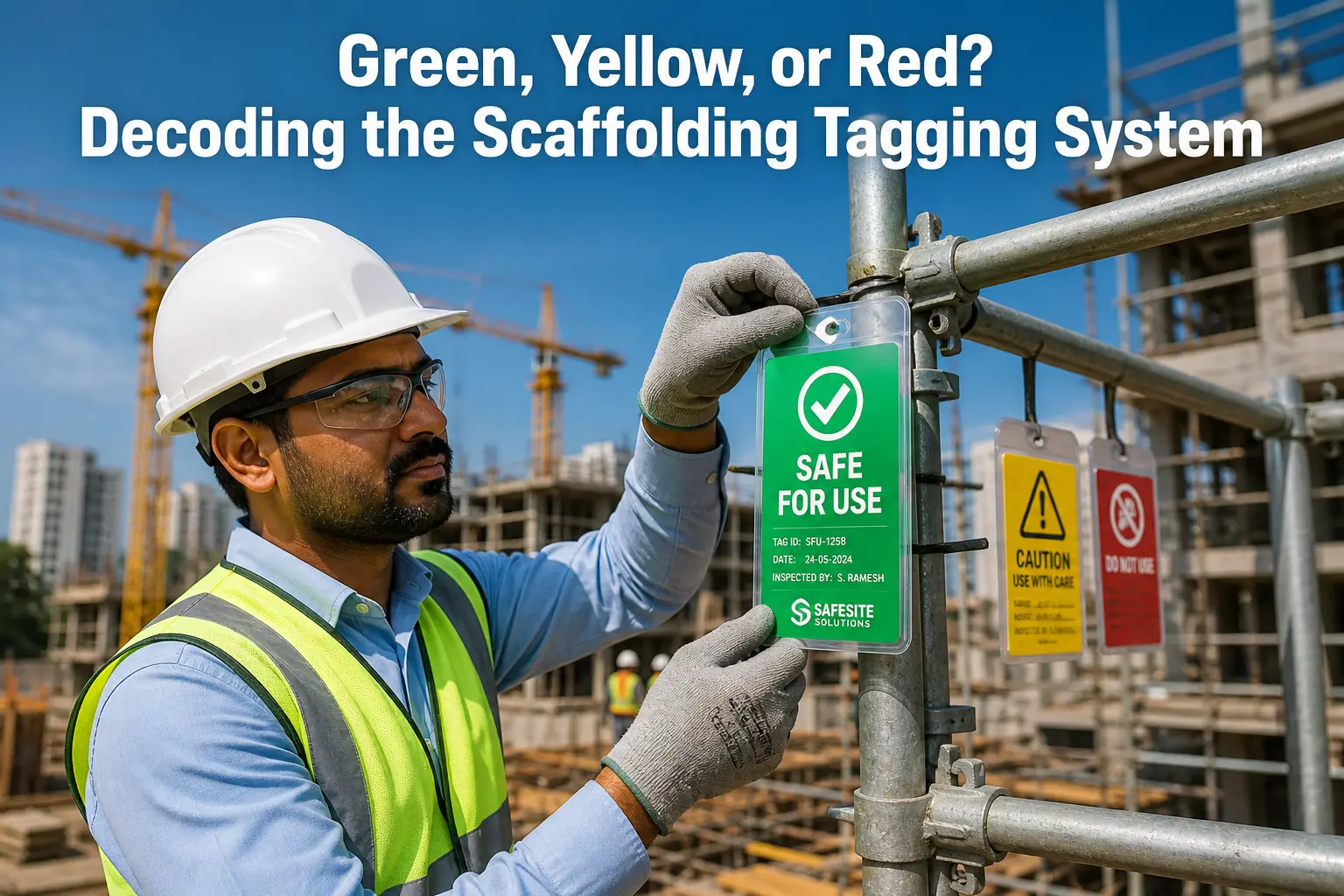
Green, Yellow, or Red? Decoding the Scaffolding Tagging System for Site Safety

Imagine a worker standing at the base of a high-rise scaffold in a bustling construction zone in Bangalore. In the noise and chaos of a busy morning, they have only a split second to decide if that structure is safe to climb. A standardized scaffolding tagging system removes the deadly guesswork from that decision. By using a universal color-coded language, these tags communicate critical safety information at a glance. This guide decodes the system to help site supervisors and workers ensure total compliance and zero accidents on-site. The Psychology of Color: Why Scaffolding Tags Save Lives In the high-pressure environment of a construction site, visual communication is often more effective than verbal instructions. The scaffolding tag colors meaning is rooted in basic human psychology—red means stop, green means go, and yellow signals caution. On a site with hundreds of workers, some of whom may speak different languages, these tags act as a “silent supervisor.” They provide a constant, unwavering safety warning that transcends language barriers and loud machinery. Implementing this visual communication isn’t just about following a trend; it is a vital part of risk prevention. When a worker sees a tag, their brain instantly categorizes the level of danger. In 2026, where Bangalore construction projects are moving at an incredible pace, especially in developing hubs like Vijayanagar, following the latest 2026 safety mandates in Bangalore is essential. There is no room for “assuming” a structure is safe. A missing tag or a faded sign is a massive red flag that can lead to catastrophic falls or structural collapses. Using these tags effectively creates a culture of safety awareness. It forces a moment of pause and verification before anyone sets foot on a platform. For site supervisors, it’s the most efficient way to track which sections of a complex scaffold have been inspected and which are still “under construction” or currently being modified. Key Insight: Scaffolding tags turn a complex safety audit into a simple, three-color visual signal that every worker on-site can understand instantly. The Three-Color System: Decoding Green, Yellow, and Red The three-color scaffolding tagging system is the global standard for height safety. It provides a clear, physical record of the scaffold’s status that cannot be ignored. In 2026, Bangalore site inspectors look for these tags immediately upon entering a site. If a tag is missing or outdated, it is treated as a major safety breach. Green Tags: Safe for Use A scaffolding green tag meaning is simple: “Go.” It indicates that the structure has been fully inspected by a competent person and is 100% safe for work. This tag must be updated every 7 days (or after bad weather). It contains the certified assembly details, the date of the last inspection, and the maximum load-bearing capacity (SWL) of the platforms. Yellow Tags: Caution / Under Construction The yellow scaffolding tag meaning is often misunderstood. It does not mean the scaffold is safe; rather, it indicates the structure is currently being modified, dismantled, or built. Yellow tags are used for specialized access only. Only the scaffolding crew wearing full fall-protection gear should be on a structure marked with yellow. Red Tags: Danger – Do Not Use A scaffolding red tag meaning is a complete prohibition. If you see a red tag, it means the structure has failed an audit, is structurally unsound, or has been damaged. It is a “Danger” sign that prevents unauthorized access. In 2026, ignoring a red tag is a dismissible offense on most professional sites in Bangalore. Who Can Sign the Tag? The Role of the ‘Competent Person’ A scaffolding tag is only as reliable as the person who signs it. In the eyes of the law and according to the latest 2026 safety mandates in Bangalore, a tag is not valid unless it is signed by a “Competent Person.” This individual isn’t just any worker; they are someone with the specific technical training and site experience required to identify existing and predictable hazards. On most sites, the authorized scaffolding inspection is the responsibility of the safety officer or a senior site supervisor. Their safety officer duties involve a physical walkthrough of the entire structure to verify that every ledger, standard, and brace is correctly placed. They are the final gatekeeper of the daily scaffolding inspection checklist, ensuring that the theoretical safety of the design matches the reality of the build. Key Insight: Never let a general laborer or a helper sign a scaffolding tag. The signature must belong to an appointed Competent Person who understands the legal weight of that status. Placement and Maintenance: Where Should the Tag Go? A safety tag is only useful if it is seen before a worker begins their climb. Correct scaffolding tag placement ensures that the visual warning is impossible to miss. According to BIS safety standards, every scaffold must have a designated tag holder permanently fixed at the primary access points. For most structures, this means placing the tag at eye-level right next to the main ladder entries. If a scaffold is large and has multiple entry points, each separate access ladder should have its own status tag. The tag should be housed in a durable, weather-resistant holder that protects the card from the sun and rain. In Bangalore’s intense afternoon heat, non-UV protected tags can fade within days, making the critical information—like the inspection date—unreadable. Common Mistakes in Scaffolding Tagging Even with a clear system, complacency often leads to scaffolding safety mistakes that put the entire crew at risk. One of the most frequent errors is the “stale tag.” According to safety norms, a green tag is only valid for a maximum of 7 days. Many supervisors forget to re-inspect and update the card, leaving an outdated date on the holder. Another issue is the “Ghost Signature.” This happens when a tag is signed, but the specific data—such as the maximum weight capacity—is left blank. Additionally, in the dusty and sunny climate of Bangalore, faded tags are a major concern. A dirty tag is

Read More »

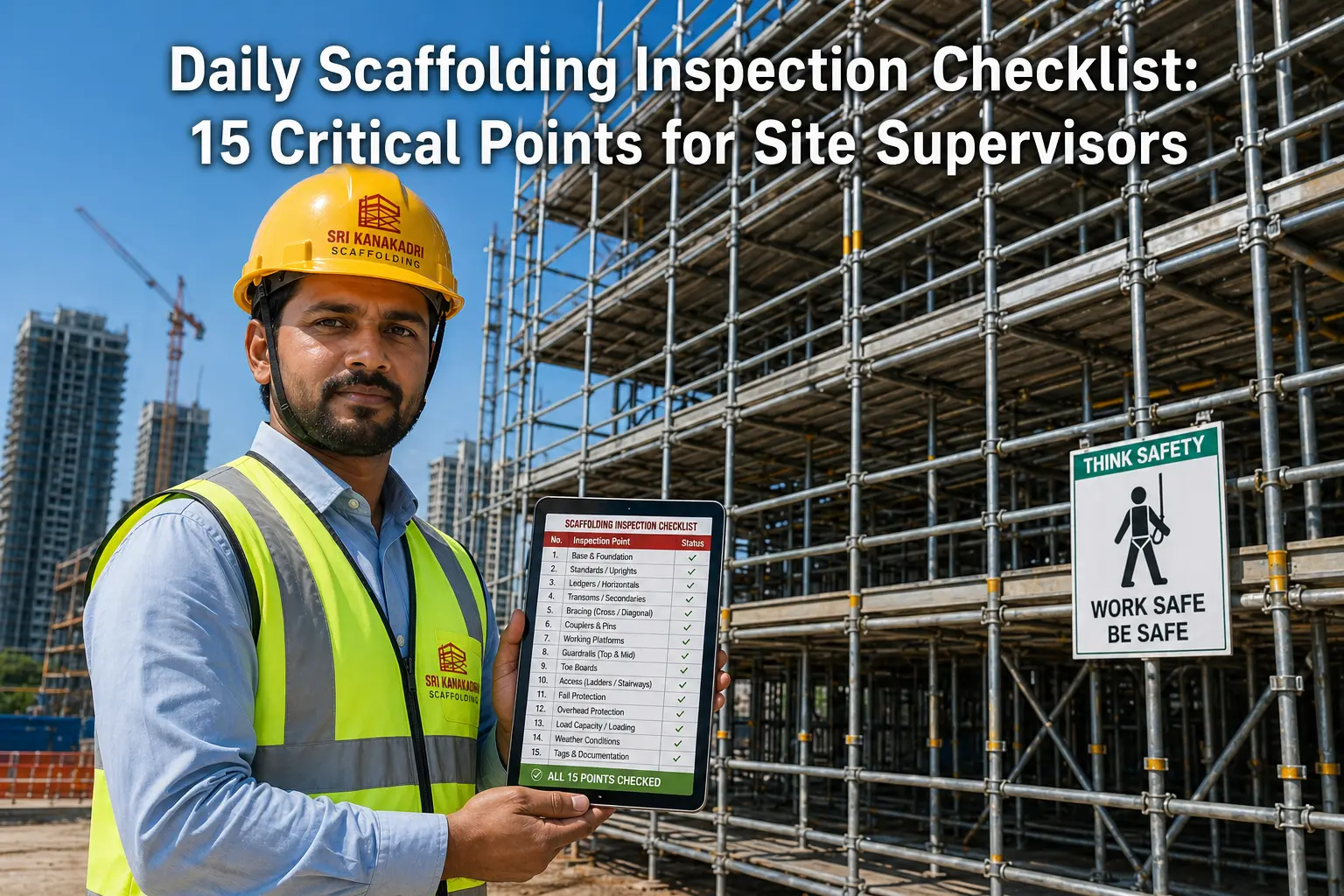
Daily Scaffolding Inspection Checklist: 15 Critical Points for Site Supervisors

Construction timelines in Bangalore are tighter than ever in 2026. One missed loose coupler or an uneven base plate can lead to huge delays or safety violations that stop a project for weeks. For site supervisors, a rigorous scaffolding inspection checklist isn’t just paperwork it’s the main thing keeping your crew safe. By following these 15 actionable, BIS-aligned checkpoints, you keep your site accident-free and protect your equipment. Why Daily Scaffolding Inspections are Mandatory in 2026 The construction scene in Bangalore has changed. With the latest safety mandates, a scaffolding safety audit in Bangalore is now a daily requirement. As a supervisor, you have to verify that every part of the structure from the ground up stays compliant with BIS standards even with heavy daily use. In 2026, inspectors are looking for “Risk Mitigation at Source.” This means if there’s an issue, the first thing they’ll ask for is your signed daily log. If you don’t have a dated, point-by-point verification, you could face heavy penalties under the work-at-height regulations for Bangalore. Beyond the laws, a quick daily check catches small problems like a shifting base plate before they turn into real danger. Take Vijayanagar for example. Heavy rain overnight can quickly soften the soil under the scaffold’s sole boards. Without a morning check for sinkage, that structure could be leaning by lunchtime. A disciplined inspection culture keeps your team confident and your project on track. Key Insight: A daily checklist turns safety from a vague idea into a solid process that protects your workers and your company’s reputation. The 15-Point Daily Scaffolding Inspection Checklist Managing a busy site means leaving nothing to chance. This 15-point daily scaffolding inspection checklist helps you spot structural and safety issues before anyone climbs up. Instead of just “looking” at the scaffold, you need to physically verify the most important parts. Whether it’s a small mobile tower or a high-rise system, these daily safety checks keep the structural integrity of your site intact. 1. Foundation & Ground Support Verification The whole scaffold is only as steady as the ground it sits on. A scaffolding base plate check is the first step every morning. In areas like Vijayanagar, where soil density varies, a firm, level foundation is vital. Make sure the load is moving correctly through the base plates and onto the sole boards. If the ground has been softened by rain or shifted by nearby digging, the scaffold’s level is already at risk. For heavy cuplock scaffolding, this pressure is high, so any sinkage leads to a dangerous lean very quickly. 2. Vertical Alignment & Plumbness Scaffolds must carry weight straight down. The vertical tubes, or standards, have to be perfectly upright. Even a small tilt shifts the center of gravity and puts too much stress on the couplers. Achieving a scaffolding plumb and level status is a must. The 2026 Bangalore safety standard is the 1% tilt rule. For every meter of height, the standard shouldn’t lean more than 10mm. Use a magnetic spirit level to check the structural uprights on two sides. If it’s leaning, don’t just “pull” it back while workers are on it find the root cause at the base. 3. Coupler & Fitting Integrity The fittings are what hold the whole thing together. During your scaffolding coupler inspection, physically check that connections are tight. Vibration from work often loosens right-angle couplers and swivel fittings. Use the “hand-check” method. If you can move a coupler by hand, it’s loose. Also, check for joint pins where pipes meet. A missing pin in a vertical pipe is a major failure. In Bangalore, MS scaffolding pipe thickness (usually 40NB) is key; worn-out couplers won’t grip a thin or rusted pipe properly. 4. Platform, Planking, and Toe Boards Scaffolding platform safety is about the walking surface. Every morning, walk the platforms to ensure planks are butted together and secured. Check for “overlapping planks.” They should overlap by at least 150mm or be cleated down. Any gap bigger than 25mm is a trip hazard. Also, look for warped or cracked boards. Finally, check your guardrails (top rail at 950mm) and ensure toe boards are 150mm high to stop tools from falling on people below. 5. 15. Bracing, Access, and Load Management These final points ensure the scaffold stays rigid and safe under pressure: 5. Bracing: Check that diagonal braces are installed. This stops the scaffold from “swaying” in the wind. 6. Structural Ties: Make sure the scaffold is anchored to the building and the ties are tight. 7. Access Ladders: Ladders must be secured and clear of tools. 8. Safe Working Load (SWL): Don’t let workers stack too many bricks or heavy gear on one level. 9. Environment: Look for new power lines or debris from nearby sites. 10. Scaffolding Tags: Ensure the Green Tag is signed. If it fails, put up the Red Tag immediately. 11. Walkways: Keep the paths clear of trip hazards. 12. Netting: Check that debris netting isn’t torn. 13. Electrical Safety: Keep a safe distance from live wires. 14. Rail Stability: Give the guardrails a shake to make sure they’re solid. 15. Tool Safety: Ensure workers are using lanyards for their tools up high. Common Inspection Mistakes Site Supervisors Make Even experienced supervisors can fall into the “familiarity trap” assuming because it was safe yesterday, it’s safe today. This leads to a quick glance instead of a real check. A common mistake in Bangalore is ignoring unauthorized changes. Often, other workers might remove a brace or a rail to move materials and forget to put it back. If you don’t do a specific scaffolding rental mistake check, these gaps stay hidden. Another big one is the “Green Tag” forgery signing the book without actually walking the scaffold. Key Insight: Safety isn’t a one-time job. The moment you stop looking for problems is exactly when an accident happens. FAQs: What Supervisors Ask About Scaffolding Inspections Who can perform these inspections? It must be a “Competent Person.” This is someone with

Read More »

Work at Height Regulations 2026: Mandatory Safety Norms for Bangalore Builders

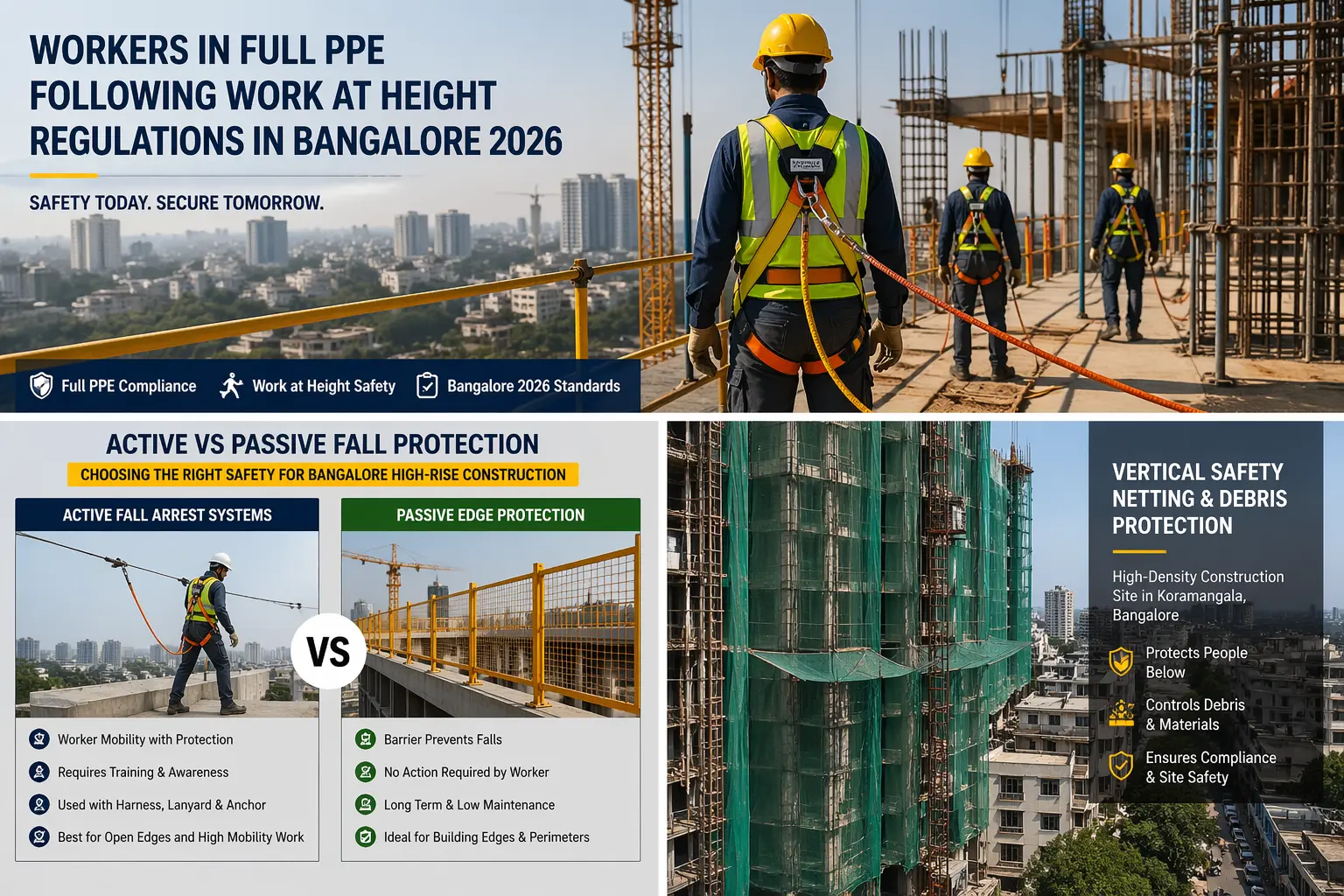
In Bangalore’s race to the sky, the cost of negligence is higher than ever. With the Karnataka government tightening enforcement of the BOCW Act in 2026, understanding work at height regulations in Bangalore is no longer just about safety—it’s about legal survival. Whether you are developing tech parks in Whitefield or high-rise residential towers in Hebbal, strict compliance is the only way to protect both your workforce and your business. This guide breaks down the mandatory norms, from BBMP bylaws to advanced fall arrest systems, ensuring your project stays compliant and your sites remain accident-free. The Regulatory Landscape: BOCW Act & Karnataka State Rules Navigating the legal framework for construction safety in India has historically been a challenge due to overlapping regulations. However, 2026 marks a pivotal shift with the implementation of the Occupational Safety, Health and Working Conditions (Karnataka) Rules, 2026. This new mandate consolidates several older statutes, including the central BOCW Act 1996, into a unified state-level enforcement strategy. For builders in Bangalore, this means that compliance is no longer a “check-the-box” activity but a strictly monitored digital and physical requirement overseen by the Karnataka Labor Department. Under the updated work at height laws India 2026, the focus has shifted from mere guidelines to mandatory safety infrastructure. The rules now demand that every project of significant scale must establish a dedicated Safety Committee and appoint a qualified Safety Officer. These officers are legally responsible for ensuring that all site activities align with the latest National Building Code (NBC) standards. Failure to adhere to these Karnataka Labor Laws can lead to immediate work-stop orders and significant financial penalties, making it essential for developers to integrate safety planning into the very first phase of project mobilization. Understanding the 1.8-Meter Trigger Point One of the most critical aspects for site supervisors to grasp is the legal definition of “working at height.” In the 2026 regulatory environment, the “1.8-meter rule” remains the primary trigger point for mandatory safety intervention. According to the mandatory fall protection guidelines Karnataka, any task performed where a worker could potentially fall a distance of 1.8 meters (approximately 6 feet) or more requires the immediate installation of certified fall arrest systems or edge protection. This threshold is not arbitrary; it is the point where the risk of serious injury increases exponentially. On a typical Bangalore site—whether it’s a residential villa in Sarjapur or a metro pier cap on the Outer Ring Road—reaching this height mandates the use of either “passive” protection (like sturdy guardrails and toe boards) or “active” protection (such as full-body harnesses with secure anchorage). By strictly enforcing the 1.8-meter rule, builders ensure they are compliant with the Working at Height definition used by labor inspectors during surprise site audits, effectively shielding the project from both physical accidents and legal liability. Key Insight: Never assume a “small” height is safe. Labor inspectors in Bangalore now use the 1.8-meter mark as the baseline for issuing safety citations. If your platform is at head height, your safety gear must be on. Mandatory Fall Protection Systems for Bangalore High-Rises As Bangalore’s skyline grows more ambitious, the engineering of safety systems must keep pace. Relying on basic scaffolding is no longer enough for skyscrapers in Whitefield or the Outer Ring Road. A modern fall arrest system in Bangalore is categorized into two distinct types: passive and active protection. Passive systems, such as guardrails and barriers, require no worker intervention to function. Active systems, however, involve equipment that the worker must wear and properly anchor to a secure structure. For high-rise projects, a combination of both is required to meet 2026 safety benchmarks. Personal Protective Equipment (PPE): The Double-Lanyard Standard Under the latest safety harness regulations in India, the 2026 standard for high-rise construction specifically mandates the “Double-Lanyard” full-body harness. This requirement is designed to ensure “100% tie-off,” meaning the worker is always connected to a secure anchorage point, even while moving between different sections of the scaffold. A single lanyard leaves a dangerous gap in protection during transitions; the double-lanyard system eliminates this risk entirely. Every harness must be equipped with a shock absorber to minimize the impact on the human body during a fall. Furthermore, site managers must be trained to recognize the signs of suspension trauma, which can occur if a worker remains hanging in a harness for too long. For major infrastructure projects, like those managed by BMRCL, having a documented rescue plan alongside these PPE requirements is now a non-negotiable part of the daily safety brief. Safety Netting and Perimeter Guarding In high-density neighborhoods like Koramangala or Indiranagar, construction doesn’t just happen in isolation—it happens over busy pedestrian paths and public roads. This makes safety netting and perimeter guarding a vital part of the construction safety norms in Bangalore. Debris nets and vertical catch platforms are mandatory to prevent falling objects from reaching ground level, where they could cause third-party injuries or property damage. 2026 guidelines require that these nets be UV-resistant and fire-retardant, given Bangalore’s intense sun and the prevalence of welding work on-site. Perimeter guarding must be robust enough to act as a physical stop for both personnel and equipment. For builders, investing in high-quality vertical netting is a proactive measure against the severe legal liabilities and “Stop-Work” notices that follow a debris-related accident in a public zone. Key Insight: Passive protection (nets and rails) protects everyone on and around the site, while active protection (harnesses) is the last line of defense for the individual worker. A compliant site uses both simultaneously. The Hierarchy of Controls: Strategic Risk Management In the 2026 safety landscape, simply handing out harnesses to workers isn’t a safety strategy; it is a reaction. Professional builders in Bangalore utilize the “Hierarchy of Controls” to manage risks systematically and effectively. This work at height safety strategy follows a specific order of priority: Elimination, Substitution, Engineering Controls, Administrative Controls, and finally, Personal Protective Equipment (PPE). The primary goal is to remove the hazard entirely before relying on a piece of equipment

Read More »

The Comprehensive Guide to Scaffolding Safety Standards, Training, and IS 2750 Compliance in India

Safety compliance in the Indian construction sector has evolved from a voluntary best practice into a critical legal mandate. As cities like Bangalore witness unprecedented urbanization, the complexity of work-at-height activities has grown exponentially.  Adhering to scaffolding safety standards in India, specifically the IS 2750 code, is now the only way to ensure structural integrity and mitigate site risks.  This guide provides an authoritative roadmap through regulatory compliance, safety certifications, and the expert training required to master modern construction safety in the 2026 landscape. Understanding IS 2750: The Backbone of Indian Scaffolding Standards What is IS 2750? IS 2750 is the Bureau of Indian Standards (BIS) code that specifies the requirements for steel scaffoldings. It covers material quality, dimensions of tubes, and the structural design necessary to ensure the safety of workers at height in India. The IS 2750 standard isn’t just a technical manual; it is the legal foundation for every steel scaffold erected in the country.  While many international contractors in Bangalore look toward OSHA (Occupational Safety and Health Administration) for global guidance, IS 2750 is specifically calibrated to the materials and environmental stresses found in the Indian subcontinent.  While OSHA focuses heavily on the “process” and management of safety, the Indian IS 2750 scaffolding specifications are deeply rooted in the structural integrity and metallurgical quality of the individual components. Key Technical Specifications of BIS 2750 To meet Indian standards for tubular scaffolding, contractors must look beyond the visual assembly and focus on material metrics. The code primarily dictates the use of Grade YST 210 or YST 240 Black Mild Steel (MS) pipes.  For a structure to be deemed compliant, the standard nominal bore (NB) of the tubes must be 40mm, resulting in an outer diameter of approximately 48.3mm. A critical data point often overlooked by site supervisors is wall thickness. Under BIS 2750, the tube thickness must generally be either 3.25mm (Medium) or 4.0mm (Heavy), depending on the intended load-bearing capacity.  Using “light” pipes with lower wall thickness is a common but dangerous violation; it significantly compromises the scaffold’s ability to handle vertical compression and lateral wind pressure—a major risk factor for high-rise clusters in areas like North Bangalore. Key Insight: Adhering to these specific dimensions ensures that all standard couplers and fittings lock seamlessly. Mechanical failures often occur not because a part was “broken,” but because mismatched pipe diameters prevented the fittings from achieving a secure grip. Core Safety Components: Engineering a Fail-Safe Structure Engineering a safe scaffold requires more than just high-quality steel; it requires a holistic approach to the assembly of individual components. In the industry, we often speak of a “fail-safe” structure.  This means that if one component is slightly stressed, the system as a whole remains stable because the construction scaffolding safety norms were followed during the initial design and erection. Every ledger, transom, and brace must work in harmony to prevent structural collapse. The Role of Base Plates and Sole Boards in Soil Stability The safety of any scaffold begins at the ground level. A common oversight on Bangalore sites is ignoring ground conditions, especially during the monsoon season when the earth becomes soft and unpredictable.  Scaffolding base plate safety is critical because the base plate is responsible for transferring the entire weight of the structure and its occupants into the earth. However, on soft or uneven terrain, a steel base plate alone is insufficient. In such cases, we use sole boards—wide timber or steel planks placed under the base plates—to further distribute the load across a larger surface area.  Without proper load distribution, the vertical “standards” can sink into the ground, causing a disastrous tilt. In areas like Sarjapur or Hebbal, where construction often happens on reclaimed land, using a combination of adjustable base jacks and heavy-duty sole boards is not just a recommendation; it is a necessity for structural survival. Guardrails and Toe Boards: Preventing Fall Hazards Falls from height remain the leading cause of construction fatalities. To achieve effective scaffolding fall protection, the installation of guardrails and toe boards is non-negotiable. According to IS code safety benchmarks, a standard guardrail system must include: Main Guardrail: Fixed at a height of 950mm to 1200mm above the working platform. Mid-rail: Positioned so that the gap between the toe board and the main rail does not exceed 470mm. Toe Boards: Must be at least 150mm high to prevent tools or materials from accidentally being kicked off the edge onto people below. Key Insight: Never use scrap wood or thin wires as substitutes for proper guardrails. A compliant system must be rigid enough to withstand the weight of a worker leaning or falling against it without bending or dislodging from the standards. The Human Element: Training and the “Competent Person” Role Even the most technologically advanced scaffold, built with the highest-grade IS 2750 steel, is only as safe as the people who assemble and use it. In the construction industry, we emphasize that safety is a shared responsibility, but the legal and structural burden rests on the shoulders of the “Competent Person.”  Under scaffolding safety training in India, a competent person is defined as someone capable of identifying existing and predictable hazards and who has the specific authorization to take prompt corrective measures to eliminate them. Expert Tip: In 2026, Bangalore municipal authorities and major developers often require Third-Party Inspection (TPI) for projects exceeding 15 meters. Never rely solely on an internal audit for high-rise steel structures; ensuring your supervisor is a certified “Competent Person” is your first line of defense against legal liability. Mandatory Training Modules for Site Workers Proper scaffolding safety certification isn’t a one-time event but a continuous process of education. For workers in Bangalore’s fast-paced hubs like Manyata Tech Park or Electronic City, training must be practical and language-accessible. Essential training modules should include: Assembly & Dismantling Sequence: Understanding the step-by-step logic to ensure the structure never becomes unstable during the “build” or “teardown” phases. Load Recognition: Teaching workers to identify the difference between light-duty and heavy-duty

Read More »

A Class vs. B Class MS Scaffolding Pipes: The Bangalore Safety Standard

Many contractors in Bangalore mistakenly believe that all steel pipes are the same, provided they look sturdy. However, choosing the wrong MS scaffolding pipe thickness can be the difference between a successful project and a catastrophic site collapse. As Bangalore’s skyline stretches higher, especially in hubs like Vijayanagar and North Bangalore, the pressure on temporary structures has never been greater. This guide is a vital resource for site engineers, civil contractors, and developers who need to understand why the “Class” of a pipe is more than just a label—it is a safety mandate. Whether you are building an independent house or managing a high-rise commercial complex, understanding technical specifications is your first line of defense. At Sri Kanakadri Scaffolding, we believe that transparency in material quality is the foundation of trust. Need a Professional Safety Audit or Quality Scaffolding? Call Sri Kanakadri Scaffolding Today at +91 9113276916! One Minute Summary A-Class (2.6mm): Best for light work like painting. B-Class (3.2mm): The structural standard for slab casting and high-rises in Bangalore. Why it matters: Thicker pipes prevent buckling and ensure compliance with 2026 safety trends. Expert Tip: Always check for the Blue Band (B-Class) on your pipes before erection. Partner: Sri Kanakadri Scaffolding provides certified, high-quality MS pipes with fast Bangalore-wide delivery.   Table of Contents Why MS Scaffolding Pipe Thickness Matters Standard Thickness Values in India A Class vs. B Class: The Comparison High-Rise Requirements in Bangalore How to Choose the Right Pipe Safely Common Mistakes to Avoid Why Sri Kanakadri Scaffolding? 2025–2026 Safety Trends Frequently Asked Questions What is MS Scaffolding Pipe Thickness and Why Does It Matter in Bangalore?  In simple terms, MS scaffolding pipe thickness refers to the wall thickness of the Mild Steel tubes used to create the structural framework of a scaffold. It determines how much weight a pipe can carry before it buckles or bends. In Bangalore’s fast-paced construction scene, thickness impacts three critical areas: Load Capacity: Thicker pipes (like B-Class) can support heavy concrete slabs and multiple workers simultaneously. Safety Compliance: With stricter labor department inspections in 2026, using sub-standard thickness can lead to heavy fines. Durability: Bangalore’s fluctuating weather can cause internal rust; thicker walls ensure the pipe remains structurally sound for longer durations. What Are the Standard MS Scaffolding Pipe Thickness Values in India?  Scaffolding pipes in India generally follow the IS 1239 or IS 1161 standards. The standard MS scaffolding pipe thickness for structural construction usually ranges between 2.6mm and 4.0mm. Light Applications: 2.6mm is often used for painting or minor repairs. Structural Support: 3.2mm is the “sweet spot” for most residential projects in Bangalore. Heavy Industrial/High-Rise: 4.0mm and above are used where extreme vertical loads are expected. The variation depends entirely on the height of the scaffold and the weight of the material (like stones or concrete) it needs to support. What is the Difference Between A Class and B Class MS Scaffolding Pipes?  Understanding the classification is essential for procurement. Pipes are typically color-coded at the ends for easy identification: A-Class (Yellow), B-Class (Blue), and C-Class (Red). Feature A Class (Light) B Class (Medium) Wall Thickness Approx. 2.6mm Approx. 3.2mm to 3.25mm Weight Lighter (easier to carry) Heavier (stable load-bearing) Color Coding Yellow Band Blue Band Primary Use Painting, Plastering Slab Casting, High-Rise Support Cost 15-20% Cheaper Premium for Safety Using the correct MS scaffolding pipe thickness ensures that the ledger and standards don’t fail under pressure. Which Pipe is Stronger for Construction Projects? B-Class pipes are significantly stronger. While A-Class pipes are tempting due to lower rental costs, they lack the structural “stiffness” required for slab centering. If you are casting a slab for a 30×40 site in Vijayanagar, B-Class is the industry standard for stability. How Thickness Impacts Safety on Site A thinner pipe has a lower “Radius of Gyration,” meaning it is more likely to “snake” or buckle under a vertical load. Choosing the right MS scaffolding pipe thickness prevents the risk of sudden collapses that often occur during concrete vibration. Which MS Scaffolding Pipe Thickness is Best for High-Rise Buildings in Bangalore?  Bangalore’s high-rise growth has surged by 35% in 2026 (Source: CREDAI). High-rise buildings face unique challenges like Wind Load. As you go higher, wind pressure increases, putting lateral stress on the scaffolding. For high-rise projects, B-Class MS scaffolding pipe thickness (3.2mm+) is mandatory. Thinner A-Class pipes can vibrate excessively at height, leading to worker vertigo and joint loosening. How to Choose the Right Scaffolding Pipe Thickness for Your Project?  Choosing the right MS scaffolding pipe thickness involves balancing your budget with the physical demands of the site: Residential (G+2): A mix of A-Class for painting and B-Class for slab support is common. Commercial/Industrial: Exclusively B-Class or C-Class to handle machinery and heavy footfall. Duration: For long-term projects (6 months+), thicker pipes are better as they resist atmospheric corrosion more effectively. What Mistakes Should You Avoid When Selecting Scaffolding Pipes?  Prioritizing Price over Pipes: Choosing B-class for the bottom levels and “sneaking in” A-class for the top levels is a recipe for disaster. Ignoring the Band: Always check the color band. If the blue band is missing, verify the MS scaffolding pipe thickness with a vernier caliper. No Supplier Verification: Many local vendors mix scrap-grade pipes with fresh stock. Always rent from a supplier with a proven safety track record.   Where to Find Reliable MS Scaffolding Pipes in Bangalore?  Finding quality MS scaffolding pipes in Bangalore requires a supplier who understands local soil and wind conditions. Sri Kanakadri Scaffolding, based in Vijayanagar, provides ISI-marked B-Class pipes that undergo 20-point quality checks. We ensure fast delivery to all parts of Bangalore, keeping your project timeline intact. Why Choose Sri Kanakadri Scaffolding for Safe & Standard MS Pipes? Experience: 15+ years serving Bangalore’s top builders. Zero-Accident Policy: We never compromise on MS scaffolding pipe thickness. Technical Support: We help you calculate the exact number of B-Class pipes needed based on your slab load. 2025–2026 Construction Safety Trends in Bangalore  According to recent data

Read More »

Versatile Support: Scaffolding Rental for Different Construction Needs in Bangalore’s Rising Skyline

Bangalore’s skyline is transforming at an unprecedented pace. In 2025 alone, the city added over 15 million sq. ft. of commercial space (Source: CREDAI/Statista), primarily across high-growth corridors like North Bangalore and the West expansion near Vijayanagar. For Site Engineers and HOAs, this growth brings a “Paradox of Choice.” Selecting the wrong support system can lead to budget leaks, site delays, or worse catastrophic safety failures. Professional Scaffolding Rental Services have evolved from simple iron pipes into engineered modular solutions tailored to specific heights, loads, and urban constraints. This guide serves as a strategic roadmap for Civil Contractors and Facility Managers to navigate the complexities of Bangalore’s construction access. Whether you are managing a boutique villa renovation in Vijayanagar or a sprawling IT park in Whitefield, knowing which system to deploy is the first step toward a successful project. Your building’s safety shouldn’t be a gamble. Call Sri Kanakadri Scaffolding Today at+91 9113276916for an expert site consultation! One-Minute Summary The Need: Different projects require specific support (H-frame for painting, Cuplock for heavy loads). The Safety: Only hire Scaffolding Rental Services that provide IS-certified, rust-free, galvanized gear. The Price: 2026 rates in Bangalore start from ₹6,000 for H-frames, with delivery distance from Vijayanagar playing a key role in final costs. The Action: Call Sri Kanakadri Scaffolding for a site-specific layout and safety quote. Table of Contents Mapping Scaffolding to Project Needs Technical Cuplock Benefits for High-Rise Slab Casting Cost Comparison: Cuplock vs. H-Frame 2026 Rental Price & Logistics Guide Why Vijayanagar Builders Trust Sri Kanakadri FAQs  How to Match Scaffolding Rental for Different Construction Needs? In a city like Bangalore, “one size fits all” is a dangerous philosophy. A narrow-setback project in a residential layout requires a completely different approach than a high-load industrial site. Effective Scaffolding Rental Services begin with accurate site mapping. Residential Painting & Plastering For residential projects, speed and ease of movement are paramount. H-Frame systems are the industry standard here. They allow painters to cover large surface areas quickly. However, the advantages of Cuplock over traditional scaffolding become apparent even in residential settings when the building exceeds four floors, providing better lateral stability. Commercial IT Park & Mall Maintenance Facility managers in areas like Electronic City often require “Clean Access.” This means using Mobile Aluminum Towers or suspended platforms. These systems are lightweight, rust-free, and designed to fit through standard doorways without scratching expensive granite or Italian marble flooring. Using professional Scaffolding Rental Services ensures you get equipment that won’t leave stains on your premium facade. What are the Technical Cuplock Scaffolding Benefits for High-Rise Slab Casting? As Bangalore builds higher, the “cup-and-node” mechanism is replacing traditional pipe-and-clamp setups. This transition is driven by the need for structural rigidity that human error cannot compromise. High-Load Bearing Capacity When discussing Cuplock scaffolding for high-rise slab casting, Site Engineers focus on the node points. Each node can typically handle a load of $57kN$, making it the “Gold Standard” for heavy industrial slabs. Sri Kanakadri Scaffolding Cuplock solutions ensure that the weight of wet concrete is distributed evenly, preventing structural buckling. Wind-Load Resistance at Height For projects reaching 15–20 floors in wind-prone areas like Hebbal, Cuplock scaffolding benefits include superior wind-load resistance. The rigid locking action ensures that the entire tower acts as a single monolithic unit, a critical safety feature that traditional H-frames lack at extreme heights. Cuplock vs H-Frame: Analyzing the Scaffolding Rental Cost for 2026 Budgeting in 2026 requires looking beyond the rental receipt. With Bangalore labor costs rising by 9% this year, the speed of assembly is now the primary driver of ROI for Scaffolding Rental Services. Labor Efficiency and Assembly Speed Cuplock systems are roughly 50% faster to assemble than traditional frames. While the Cuplock vs H-frame scaffolding rental cost may show a higher monthly fee for Cuplock, you save significantly on the “Man-Day” cost. For a mid-sized apartment, this can mean saving 4 to 6 days in labor costs alone. ROI on Site Safety Using professional Scaffolding Rental Services reduces insurance premiums and site downtime. A single minor accident can halt a project for weeks; investing in high-quality steel systems from Sri Kanakadri Scaffolding is effectively an insurance policy for your project timeline. Understanding Scaffolding Rental Services: Prices & Logistics in Bangalore Transparency is the foundation of trust. Below is the current market estimate for rentals in the Vijayanagar and West Bangalore region. 2026 Rental Price Table Construction Need Recommended System Est. Rent/Month (2026) Small Home Painting H-Frame Staging ₹6,000 – ₹10,000 Heavy Slab Support Cuplock System ₹15,000 – ₹25,000 Indoor Maintenance Mobile Aluminum Tower ₹8,000 – ₹12,000 Note: Prices vary based on height and the specific Cuplock scaffolding rent per month Bangalore market fluctuations. Why Vijayanagar Builders Trust Sri Kanakadri Scaffolding Rental Services? Being a hyper-local supplier in Vijayanagar allows us to solve the biggest construction hurdle: Logistics. 24-Hour Dispatch: We serve MC Layout, Nagarbhavi, and Rajajinagar with same-day delivery. Compliance & Trust: Every piece of our inventory meets IS 3696 safety norms, ensuring your site passes any surprise government inspection. Maintenance: We provide “Zero-Rust” materials. Clean equipment doesn’t just look professional; it lasts longer and ensures easier assembly for your workers. FAQs Q1: What is the most cost-effective scaffolding rental for a 4-story building in Bangalore? For most 4-story residential sites, H-frame staging is the most cost-effective due to lower rental rates and sufficient height stability. Q2: Are Cuplock scaffolding benefits worth the extra cost for residential slabs? Yes, if the slab is heavy or industrial-grade. The time saved in assembly often offsets the higher rental price. Q3: How much does Cuplock scaffolding rent per month in Bangalore West? Depending on the quantity, prices range between ₹15,000 to ₹25,000 per month for complete sets in the Vijayanagar area. Conclusion: Securing Bangalore’s Future Versatility in Scaffolding Rental Services is the key to balancing project safety with profitability. By matching the right technology whether it’s H-frames for finishing or Cuplock for structural integrity you avoid the trap of over-spending or under-securing. Don’t

Read More »

Contact Us