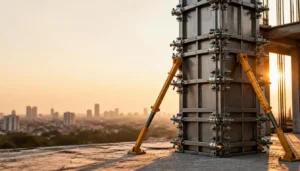
 When you pour fresh concrete into a vertical pillar mold, the wet mix acts like a heavy fluid. This means it creates massive lateral hydrostatic pressure that pushes hard against the bottom third of your framework. Choosing a high-quality steel column box on rent is essential because traditional wooden panels often warp, bow, or crack under these intense side loads. A heavy-duty steel framework provides the structural rigidity needed to hold its shape perfectly, preventing expensive structural alignment errors or sudden blowouts during a fast M35 concrete pour.
Unlike horizontal slab decks where the main weight presses straight down, vertical pillar walls experience a dynamic outward thrust that increases with the concrete discharge rate and height. If you rely on sub-standard column shuttering plates Bangalore setups without checking the load capacity, the mud-work will bulge, causing uneven finishes and structural honeycombing. Sourcing certified steel panels keeps your dimensions uniform and ensures the column can take the force of internal mechanical vibrators safely.
To understand how these vertical support demands contrast with horizontal framing requirements on site, read through our detailed breakdown of Adjustable Acrow Span Rental Bangalore Systems.
How to Support Column Formwork Against Bursting
Arresting the intense fluid pressure at the base of a vertical pour requires a reliable combination of external bracing hardware. To ensure you completely eliminate the risk of a framework blowout, your site team must enforce a strict mechanical locking layout.
Featured Snippet Structural Guidelines:
- High-Tensile Tie Rods: Run heavy-duty threaded tie rods directly through the modular panel layout to tie opposing shuttering faces together internally.
- Wing Nuts & Washers: Secure each rod externally with large anchoring wing nuts to distribute the fluid tension evenly across the frame.
- Rigid Yoke Clamps: Install heavy steel yokes or column collars around the outer perimeter of the box, spacing them closer together near the bottom where hydrostatic pressure peaks.
Using this multi-tiered anchoring layout keeps your framing tightly locked in place. The tie rods absorb the internal bursting forces while the external yokes prevent the outer steel sheets from buckling outward. This approach ensures your pillars dry perfectly straight and square every single time.
Key Takeaway: Do not guess when it comes to lateral pressure. Combining high-tensile internal tie rods with tightly spaced perimeter yokes balances the extreme fluid forces, guaranteeing a clean, burst-free concrete pour.
The Mechanics of Precision: Working with an Adjustable Column Formwork System
Achieving a perfect vertical plumb alignment requires more than just locking the column panels together. You need a dedicated adjustable column formwork system that allows you to micro-adjust the vertical angle of the mold after it is erected. Even a tiny 1-degree lean at the base of a high-rise pillar can cause severe structural load imbalances on the floors above. To prevent this, site engineers use heavy-duty vertical staging components to steady the frame against wind and the dynamic forces of a bucket pour.
┌─────────┐
│ Concrete│
│ Column │ <─── [Perfect Plumb Alignment]
│ Mold │
└─┬─────┬─┘
Push-Pull / \ Push-Pull
Prop (Long) / \ Prop (Short)
/ \
▼ ▼
[Ground Anchor] [Kicker Anchor]
The primary tools used for this precision tuning are double-acting, telescoping push-pull props and rigid base kickers. These props brace against the upper third of the steel box and anchor firmly into the cured concrete floor below. By turning the threaded collar on the prop, your crew can push or pull the steel mold into perfect alignment. This hardware setup ensures the formwork stays rigid and vertical, even when hit by heavy internal mechanical vibrators during the pour.
Modular Column Box Framework Dimensions and Sizing Profiles
A major advantage of using modern steel modular panels over custom timber molds is their exceptional versatility on site. Standard modular column box framework dimensions feature a grid of pre-punched slots along the outer flanges, allowing you to scale your framing sizes quickly without needing to source separate materials.
| Panel Sizing Profiles | Common Dimensions | Best Used For |
| Standard Widths | 300mm, 400mm, 450mm, 600mm | Square and rectangular building columns |
| Panel Heights | 1200mm, 1500mm, 2500mm, 3000mm | Flexible vertical stacking to match roof heights |
| Circular Radii | 300mm to 1000mm diameters | Round architectural pillars and bridge piers |
By overlapping or pinning these standard plates together in different patterns, a single kit can easily form thin rectangular pillars on one floor and large square columns on the next. This high adjustability simplifies your site asset logistics, reduces waste, and helps you maximize your equipment rotation speeds across the entire project footprint.
Key Takeaway: Double-acting push-pull props give you total control over vertical plumb alignment, while modular steel sizing profiles allow you to adjust your column dimensions instantly without buying new materials.
Stripping Timelines: Column Deshuttering vs. Slab Cycles
When managing asset rotation on a fast-moving site, you must treat vertical and horizontal framework timelines as completely separate schedules. Sourcing a high-quality steel column box on rent offers a major financial benefit: vertical panels can be stripped and reused much faster than horizontal slab decks. Because a vertical column does not bear heavy structural bending loads early on, you do not have to wait weeks for full concrete maturity before removing the outer molds.
Under standard engineering regulations, the vertical framework removal time is remarkably short. While a flat floor slab requires days or weeks of support to prevent micro-cracking, vertical wall and pillar forms can typically be removed just 16 to 24 hours after a pour. This quick turnaround is safe as long as the concrete has hardened enough to resist surface damage or honeycombing inspection flaws when the steel plates slide away.
By understanding this difference, you can accelerate your panel rotation speed. Your crew can strip the vertical plates the morning after a pour and immediately move them to the next grid line. This strategy maximizes your asset velocity and helps keep your project on a tight schedule.
To see how these rapid 24-hour vertical timelines contrast with the strict multi-day rules required for overhead decks, check out our deep-dive guide on Formwork Stripping Time as per IS 456 Guidelines.
FAQs: Vertical Shuttering Molds & Staging Logistics
How do providers calculate the concrete column box rental price for commercial sites?
Most equipment rental agencies figure prices based on the total surface area of the column shuttering plates Bangalore inventory you need, calculated on a monthly or daily rate per square foot. The total cost usually includes the primary steel faces along with necessary connecting hardware like corner angles, high-tensile tie rods, and adjustable push-pull props. Sourcing a complete, modular system package reduces your setup time and eliminates extra expenses for missing components.
Can standard steel shuttering plates be adjusted for both square and thin rectangular pillars?
Yes, that is a major advantage of using a modular steel configuration. The perimeter flanges of these plates feature regular arrays of pre-punched holes. By sliding the panels past one another and pinning them at the required width, your crew can form square pillars or adjust them into thin rectangular configurations without needing custom, single-use materials.
Key Takeaway: Modular steel columns offer excellent sizing flexibility on site. Renting complete, engineered kits helps lower your total expenses by providing all necessary faces and bracing components under a simple, predictable pricing structure.
Action Steps: Your Column Alignment & Bracing Checklist
To prevent costly framework blowouts and ensure perfect vertical precision, enforce this 5-step checklist before allowing your site crew to pour concrete:
- Verify the Lower Third Ties: Double-check the spacing of your perimeter yoke clamps and internal high-tensile tie rods. Ensure they are spaced tightly at the bottom where hydrostatic pressure reaches its peak.
- Tune the Push-Pull Props: Use the double-acting threaded collars on your telescoping shoring props to fine-tune the vertical plumb alignment against a digital or mechanical plumb-bob.
- Inspect Floor Anchor Points: Confirm that all base kickers and prop foot-plates are securely anchored into the cured concrete deck below to eliminate any movement during a fast discharge rate.
- Pre-Plan the 24-Hour Strike: Schedule your workforce for a quick vertical framework removal time the next morning. This maximizes your panel rotation line while keeping the concrete face protected.
- Establish Clean Cross-Links: If you are planning an interconnected deck layout, seamlessly transition your staging logistics by checking your material requirements against our Slab Formwork Scaffolding Rental Bangalore Systems Guide.
Following these simple, disciplined field verification routines protects your crew from catastrophic column bursts and delivers smooth, clean vertical faces. For larger commercial hubs or independent residential infrastructures across Karnataka, working alongside an established, locally based equipment partner like Sri Kanakadri Scaffolding ensures your site stays safe and fully code-compliant.
Contact Sri Kanakadri Scaffolding Today!
Phone: +91 9113276916
Visit our Google My Business Listing for Directions

About Sri Kanakadri Scaffolding Author – Sri Kanakadri provide Bangalore’s most reliable scaffolding on rental services, offering safe, cost-effective, and top-quality scaffolding rental solutions for all construction projects. With years of expertise, Sri Kanakadri Scaffolding is committed to delivering exceptional scaffolding on rental services in Bangalore that exceed client expectations. Our focus is on safety, quality, and affordability for every construction project. e specialize in scaffolding hire in Bangalore, offering reliable and cost-effective scaffolding rental solutions tailored to your needs. From construction scaffolding services to industrial scaffolding on rent, we ensure precision, safety, and efficiency in every project. Trust us for affordable scaffolding rentals that guarantee unmatched professionalism and reliability.