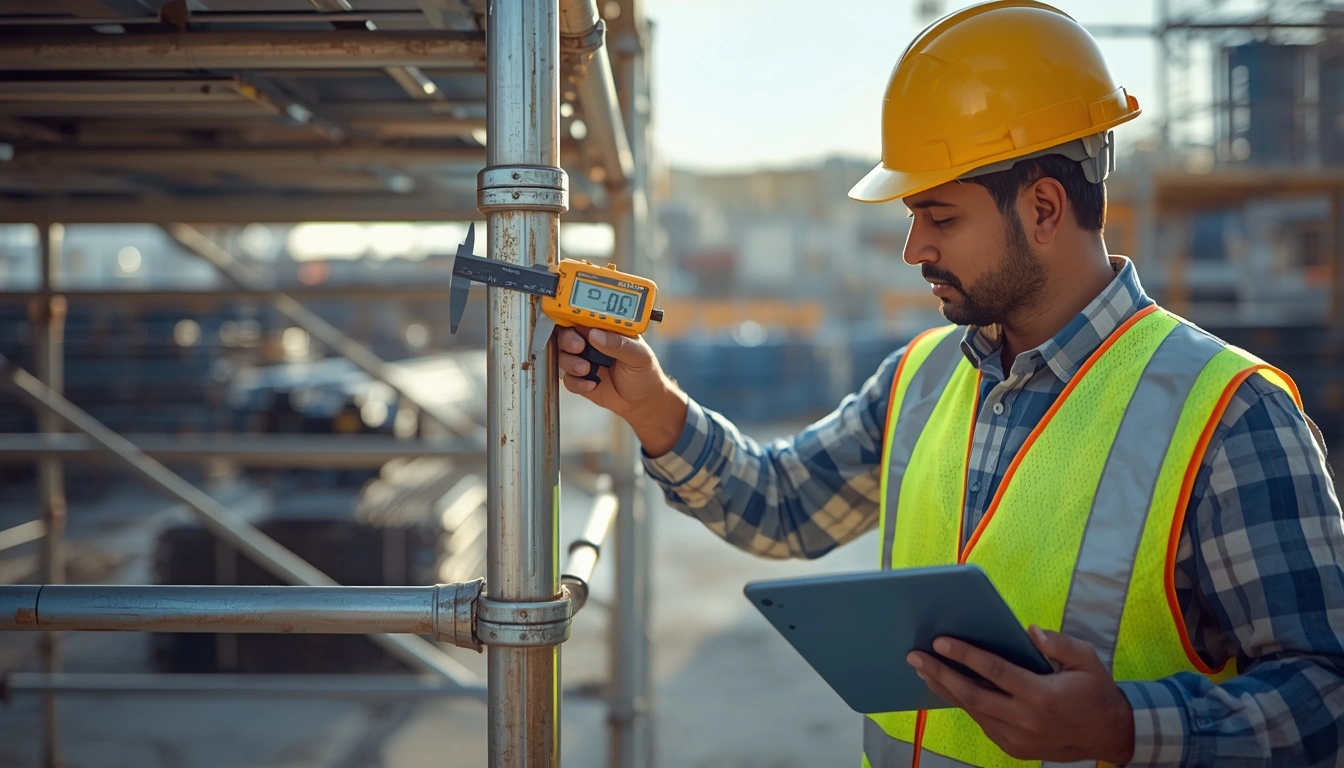

For commercial procurement managers, securing staging material isn’t just a logistics checkbox it’s a high-stakes legal and operational challenge. Hidden project delays, sudden compliance failures, and unexpected vendor disputes frequently drain project budgets. Establishing an ironclad scaffolding procurement SLA ensures your vendors are held strictly accountable for delivery timelines, safety standards, and material quality. This strategic blueprint guides you through mitigating vendor risk, safeguarding site timelines, and structuring an enforceable, performance-driven agreement from day one.
Structuring a Bulletproof Scaffolding Lease SLA Agreement
A successful construction project depends heavily on a clear contract structure. While a master lease details commercial rental rates and basic terms, it rarely protects a company from operational bottlenecks on the job site. To bridge this gap, procurement professionals must attach a dedicated scaffolding lease SLA agreement directly to their master contracts. This document transforms vague vendor promises into legally binding, measurable obligations.
Unlike standard service level agreements for construction equipment hire, a scaffolding-specific SLA must account for the unique safety hazards and fluid timelines of vertical access. It handles the gritty operational realities such as emergency replacement response windows and component compliance that broader asset leases miss entirely.
For example, if a vendor delivers structural components that fail an on-site check, a standard contract might simply promise a replacement “as soon as possible.” A well-structured SLA explicitly defines the exact hours the vendor has to deliver compliant gear before financial penalties trigger.
Key Takeaway: Treat the SLA as the operational engine of your contract. While master B2B equipment lease agreements protect the financial baseline of the transaction, the SLA is what actually keeps your site moving safely and efficiently.
Defining Strict Scaffolding Rental SLA Metrics
An SLA is useless without measurable targets. Establishing clear scaffolding rental SLA metrics provides procurement managers with the exact data needed to enforce vendor accountability.
The most critical indicators revolve around scaffold delivery and turnaround time metrics. In tight urban construction environments, a delayed truck means idle labor and wasted capital. The agreement must specify exact turnaround times (TAT) for initial site mobilization, ongoing inventory top-ups, and the rapid replacement of any defective materials found upon delivery. Without these hard numbers, vendors can easily blame traffic or yard shortages for holding up your project timeline.
Enforcing Penalties for Scaffolding Mobilization Delays
Metrics require financial enforcement to be taken seriously. When a vendor misses a critical delivery window, the cascading delays severely impact overall project profitability. To mitigate this risk, procurement teams must explicitly detail penalties for scaffolding mobilization delays within the document.
For example, if a vendor commits to a 48-hour delivery turnaround but arrives on day four, the SLA should trigger an automatic, pre-agreed deduction from their mobilization invoice. By defining these commercial terms clearly before the project begins, you prevent minor logistical excuses from escalating into a messy breach of contract dispute. Both parties know exactly what a delay costs.
Key Insight: Structure your penalty clauses on a sliding scale. A single-day delay might incur a standard daily deduction, but a prolonged failure to mobilize must grant your firm the immediate legal right to cancel the order and source from a backup supplier without absorbing any cancellation fees.
Essential B2B Scaffolding Contract Clauses for Procurement
When negotiating rental agreements, focusing purely on pricing leaves your company exposed to massive operational risk. A robust SLA must contain specific B2B scaffolding contract clauses designed to prevent vendors from unfairly shifting liability onto the general contractor. If a structural failure occurs or a legal conflict arises over damaged materials, having a clear mechanism for dispute resolution ensures your project is protected from prolonged litigation and hidden costs.
The Scaffolding Indemnification Clause
Among the most critical legal protections is the scaffolding indemnification clause. This provision shields your construction firm from financial responsibility if an accident occurs due to pre-existing equipment defects or vendor negligence.
For example, if a primary locking node on a heavy-duty cuplock scaffolding system fails under a massive concrete pour because of poor vendor maintenance, this clause ensures the liability falls squarely on the supplier. It dictates that any resulting third-party liability insurance claims remain the vendor’s responsibility, completely insulating your site management team from the fallout of their faulty equipment.
Safety Clauses in Scaffolding Rental Contracts
Similarly, precise safety clauses in scaffolding rental contracts are entirely non-negotiable for site safety. These stipulations must explicitly mandate that all supplied materials adhere to Indian IS 4014 safety compliance standards before they even leave the vendor’s yard.
Vendors must be contractually bound to provide equipment that passes rigorous, documented quality checks. By linking vendor payment directly to the successful completion of a scaffolding inspection checklist upon delivery, procurement managers guarantee that only structurally sound, compliant materials make it onto the active job site.
Enforcing Scaffold Vendor Compliance During Site Handover
An airtight agreement only protects your project if its terms are actively enforced the moment delivery trucks arrive. Managing scaffold vendor compliance during the actual site handover is where procurement strategy meets ground-level site safety. If materials are accepted without immediate verification, the liability quietly shifts from the vendor to your site engineers.
To maintain strict control during mobilization, site managers must execute a practical verification routine before any steel is unloaded. First, demand all technical and safety documentation upfront. This involves carefully reviewing the batch’s load-testing certificates to ensure the supplied tubes, base plates, and couplers meet the exact weight-bearing capacities outlined in your SLA. Missing, generic, or expired testing certificates are an immediate red flag for poor vendor maintenance and should pause the delivery.
Second, if your procurement contract includes assembly and dismantling services, you must verify the qualifications of the arriving labor team. Ensure the vendor has actually deployed certified erectors who are officially trained to handle complex structural setups. Allowing uncertified laborers to assemble high-load staging violates core safety standards and completely nullifies the indemnification clauses you worked so hard to negotiate.
Expert Tip: Implement a strict “No Papers, No Unloading” policy at the site gate. Empower your inventory receiving team to reject deliveries outright if the vendor fails to provide the required safety and testing paperwork upon arrival.
Frequently Asked Questions (FAQs)
Navigating the legal and operational complexities of a scaffolding procurement SLA can be challenging for even the most experienced project managers. Here are concise, actionable answers to common queries regarding vendor agreements to help your team secure better, safer contract terms.
How do you structure a scaffolding lease SLA?
To properly structure a scaffolding lease SLA, you must clearly define four core elements: the precise scope of work, strict scaffolding rental SLA metrics (like 48-hour delivery turnarounds), rigorous IS 4014 safety compliance standards, and explicitly enforceable financial penalty clauses for any mobilization delays.
What are the standard penalties for scaffolding mobilization delays?
If a supplier misses their promised delivery window, the SLA should enforce predefined penalties for scaffolding mobilization delays. This typically involves a sliding scale of daily financial deductions from their invoice, ensuring your construction firm doesn’t absorb the heavy costs of idle site labor.
Who is liable if leased scaffolding equipment fails on site?
Liability depends entirely on your contract structure. A strong scaffolding indemnification clause ensures the vendor takes full financial responsibility including any third-party liability insurance claims if a site accident is directly caused by their defective materials or uncertified erection teams.
Can I reject a scaffolding delivery at the site gate?
Yes. If the vendor fails to provide valid load-testing certificates or attempts to use uncertified erectors, your procurement SLA should grant your site managers the explicit authority to reject the delivery immediately without incurring any cancellation fees.
Need a vendor who already meets these strict compliance standards? Contact Sri Kanakadri Scaffolding today for a transparent, SLA-backed rental quote in Bengaluru.
Contact Sri Kanakadri Scaffolding Today!
Phone: +91 9113276916
Visit our My Business for Directions

About Sri Kanakadri Scaffolding Author – Sri Kanakadri provide Bangalore’s most reliable scaffolding on rental services, offering safe, cost-effective, and top-quality scaffolding rental solutions for all construction projects. With years of expertise, Sri Kanakadri Scaffolding is committed to delivering exceptional scaffolding on rental services in Bangalore that exceed client expectations. Our focus is on safety, quality, and affordability for every construction project. e specialize in scaffolding hire in Bangalore, offering reliable and cost-effective scaffolding rental solutions tailored to your needs. From construction scaffolding services to industrial scaffolding on rent, we ensure precision, safety, and efficiency in every project. Trust us for affordable scaffolding rentals that guarantee unmatched professionalism and reliability.