Standard mild steel is the undisputed backbone of the construction industry. It is strong, widely available, and cost-effective for general building projects. However, it is absolutely not a universal solution. In extreme industrial environments such as live electrical substations, volatile chemical processing plants, or sterile semiconductor cleanrooms deploying heavy, highly conductive, and rust-prone carbon steel becomes a critical safety hazard.
For these sensitive work sites, facility managers cannot rely on everyday staging. Preventing catastrophic accidents and costly operational downtime requires partnering with a vendor for specialized scaffolding hire Bangalore. Upgrading your access materials from basic steel to advanced, engineered alternatives is a non-negotiable requirement for high-risk zones.
This guide explores the practical engineering applications of non-standard access systems. We will break down exactly when and why site planners must transition to lightweight aluminum or non-conductive fiberglass (GRP) platforms, ensuring your crew can operate safely and efficiently in the city’s most restrictive industrial environments.
Key Insight: Choosing the wrong staging material in a specialized facility doesn’t just slow down work; it introduces fatal risks. Material science matters just as much as structural stability when planning access for extreme environments.
Why Standard Mild Steel Fails in Extreme Environments
Mild steel is excellent for bearing heavy construction loads, but its inherent physical and chemical properties make it a liability in specialized settings. When contractors try to force standard inventory into sensitive industrial zones, they frequently encounter immediate safety and compliance failures.
The most severe danger is high electrical conductivity. If a steel tube accidentally bridges a gap near a live power line or transformer, it creates a direct path for high-voltage electricity, risking fatal electrocution and severe arc flashes. Additionally, moving steel components or dropping metal tools against standard tubes can generate mechanical sparks. In a petrochemical refinery or a paint manufacturing plant where airborne flammable gases are present, a single spark can easily trigger an explosion.
Beyond immediate safety hazards, carbon steel limitations become obvious over time in harsh atmospheres. When exposed to acidic vapors or highly saline environments, steel suffers rapid oxidation. This severe rusting compromises the load-bearing integrity of the joints.
Finally, weight is a massive restricting factor. Solid steel is simply too heavy for fragile indoor environments. While traditional heavy steel frames are perfectly engineered for supporting high-load concrete pours on a slab formwork scaffolding rental Bangalore project, erecting those same massive frames inside high-end retail spaces or raised IT server rooms creates intense point-load stress under the base plates, easily cracking expensive marble tiles or collapsing suspended flooring. To safely bypass these hazards, site managers must rely on custom engineered scaffolding that solves the environmental problem before the first pole is even erected.
Key Takeaway: You cannot negotiate with physics. The high electrical conductivity, spark risk, and massive weight of standard steel make it completely unviable for high-risk industrial and fragile indoor environments.
Aluminum Mobile Towers: Lightweight Agility for Fragile Sites
When structural weight is your primary operational constraint, upgrading to aluminum is the most effective solution. Facility managers frequently rely on an aluminum scaffolding rental Bangalore partner when working over delicate indoor surfaces. Because aluminum possesses an exceptionally high strength-to-weight ratio, these lightweight access towers exert significantly less downward pressure on the ground.
By drastically reducing the point-load capacity, maintenance crews can safely erect and maneuver towers across expensive marble mall atriums, polished tiles, or delicate heritage flooring without causing structural cracking. This provides an incredibly agile indoor alternative to the heavy, fixed exterior frameworks typically deployed for heavy-duty urban construction scaffolding Bangalore applications. Beyond floor protection, aluminum allows for highly agile deployment. A small team can quickly assemble, reposition, and dismantle these frames without heavy lifting equipment. However, site officers must ensure that any mobile unit procured complies strictly with EN 1004 standards, guaranteeing that the caster wheels, outriggers, and guardrails are fully certified for safe, free-standing operation.
Best Uses: Cleanrooms, Atriums, and Tech Parks
Besides being incredibly lightweight, aluminum possesses another critical property for modern indoor scaffolding: it does not oxidize and rust like mild steel. This makes it the only acceptable metallic staging material for sterile environments.
In semiconductor manufacturing facilities or pharmaceutical labs, standard steel can shed microscopic rust particles or chipped paint flakes, instantly contaminating a highly controlled area. Because raw aluminum remains clean, stable, and flake-free, it is the absolute standard for cleanroom access platforms across Bangalore’s major tech parks and medical research facilities.
Key Takeaway: Aluminum mobile towers solve two major indoor challenges simultaneously. Their low weight protects fragile commercial flooring from cracking, and their corrosion-resistant surface protects sterile tech and medical environments from particulate contamination.
GRP & Fiberglass Scaffolding: The Non-Conductive Solution
While aluminum solves weight and corrosion issues, it remains a highly conductive metal. When working in environments where electrical hazards or explosion risks are at their peak, site managers must turn to the ultimate engineered material: Glass Reinforced Plastic (GRP). Often referred to simply as fiberglass, GRP fundamentally changes the safety equation for high-risk maintenance tasks.
The core advantage of securing fiberglass scaffolding Bangalore is the material’s immense dielectric strength. Unlike carbon steel or aluminum, fiberglass is completely non-conductive. It physically cannot transmit electrical currents, effectively creating a safe, insulated platform for technicians working near exposed infrastructure. Furthermore, GRP components do not produce sparks if they are dropped or accidentally struck with heavy tools. This unique combination of being both non-sparking and non-conductive makes GRP the only legally compliant access solution for environments where standard metals pose an immediate threat to life.
Spark-Proof Staging for Chemical Plants and Substations
The true value of GRP becomes apparent in two highly specific industrial sectors across the city. First, in electrical substations and power generation facilities, technicians frequently operate inches away from live, high-voltage infrastructure. Using metal frames in these zones risks a deadly arc flash a phenomenon where electricity jumps through the air to ground itself on a conductive surface. GRP staging eliminates this risk entirely, fully isolating the worker from the current.
Second, in petrochemical refineries and advanced manufacturing facilities, volatile airborne gases are a constant reality. Procuring specialized scaffolding for chemical plants in Bangalore requires materials that guarantee spark-resistant staging. Furthermore, when these lightweight structures are deployed outdoors around industrial processing units, safety teams must meticulously calculate the environmental exposure and scaffolding debris netting wind load parameters to prevent lateral displacement or overturning gusts from destabilizing the spark-proof framework. If a steel scaffold pole falls onto a concrete deck or is struck by a wrench, the resulting mechanical spark can easily ignite atmospheric fumes. Fiberglass staging absorbs impact without sparking, ensuring that critical overhead maintenance can proceed without requiring a total shutdown of the chemical processing line.
Key Takeaway: For live electrical zones and highly flammable chemical environments, GRP scaffolding is not just an upgrade it is a mandatory life-saving necessity that prevents fatal electrocution and atmospheric explosions.
Material Comparison: Steel vs. Aluminum vs. Fiberglass
Selecting the ideal equipment from a specialized scaffolding hire Bangalore provider requires a direct evaluation of material engineering properties against your specific site hazards. There is no one-size-fits-all material; a characteristic that makes a framework perfect for a high-traffic retail zone could make it incredibly dangerous inside a power substation.
To help procurement officers and safety managers make data-backed choices, the table below compares standard mild steel, lightweight aluminum, and non-conductive GRP (fiberglass) across critical performance metrics:
| Material Property | Mild Steel (Carbon Steel) | Aluminum Alloy | GRP (Fiberglass / Plastic) |
| Electrical Conductivity | Extremely High (Severe Hazard) | High (Hazardous) | Non-Conductive (Insulated) |
| Weight Profile | Heavy (High point-load stress) | Ultra-Lightweight (Easy mobility) | Lightweight to Medium |
| Mechanical Spark Risk | High Risk (Friction sparks) | Low Risk | Zero Risk (Spark-proof) |
| Chemical & Acid Resistance | Poor (Prone to rapid oxidation) | Moderate | Excellent (Corrosion-resistant) |
| Primary Use Case | General heavy-duty construction | High-end indoor atriums & cleanrooms | Live substations & chemical plants |
When mapping out your site safety plan, use these material properties to eliminate environmental risks. If your project involves high-voltage exposure or acidic vapors, steel should be disqualified immediately. Conversely, if your primary obstacle is high point-load limits on a fragile decorative floor, aluminum’s lightweight agility makes it the clear engineering choice over heavy carbon steel.
Key Takeaway: Matching the right material to your specific structural or environmental hazard is the fastest way to ensure absolute safety compliance and prevent costly structural failures on specialized industrial sites.
FAQs: Renting Specialized Industrial Scaffolding
Navigating the procurement process for non-standard staging involves balancing strict safety compliance with project budgets. When site managers look into an aluminum scaffolding rental Bangalore solution or specialized fiberglass inventory, several unique operational questions frequently arise.
Below are the essential technical clarifications required to streamline your industrial procurement process:
Is aluminum scaffolding safe to use around electrical infrastructure?
Absolutely not. Aluminum is a highly conductive metal. If an aluminum frame comes into contact with an exposed wire or enters the electrical arc radius of a transformer, it will instantly transmit high-voltage current to the worker. For any site with active electrical hazards, you must bypass aluminum completely and deploy non-conductive GRP (fiberglass) staging.
Why are fiberglass (GRP) scaffolding rentals more expensive than steel?
The higher rental cost of GRP is a direct reflection of advanced material engineering and manufacturing complexity. Composites like Glass Reinforced Plastic require specialized resin pulling and glass-weaving processes to achieve high dielectric strength and structural durability. While the initial rental rate is higher, it completely eliminates the financial and legal liabilities associated with electrical accidents and explosive ignition on high-risk sites.
Do installation crews require specific certifications for specialized staging?
Yes. Assembling high-clearance aluminum mobile towers or non-conductive GRP structures differs significantly from stacking standard steel Cuplock frames. Crews must be thoroughly trained in material-specific structural limitations, proper stabilization using outriggers, safe handling of lightweight interlocking pieces, and compliance with global EN 1004 engineering standards.
Key Takeaway: Never substitute specialized access materials based purely on rental cost. Choosing between aluminum and fiberglass must be driven entirely by site-specific hazards specifically floor weight limits and electrical exposure risks.
Custom Cantilevers over Active Industrial Machinery
Sometimes, the primary challenge on a specialized industrial site is not the material itself, but the physical constraints of the workspace. In active manufacturing plants and processing facilities, critical equipment often requires maintenance directly above heavy, hyper-sensitive machinery. Shutting down an entire assembly or processing line to erect standard, ground-supported scaffolding is financially damaging. In these scenarios, facility managers rely on custom engineered scaffolding configured as an industrial cantilever.
Unlike standard outdoor facade cantilevers that anchor to structural building faces, an indoor industrial cantilever is engineered to bridge over active machinery. By utilizing heavy-duty steel or aluminum counterweights at the base and extending structural load-bearing beams horizontally through space, engineers can build suspended platforms directly over high-value equipment. This bridging strategy provides technicians with stable overhead access while allowing the plant’s production lines below to keep running at full capacity.
Designing these complex bridging structures requires precise mathematical modeling. Engineering teams must carefully calculate the exact overturning moments, center of gravity shift, and point-load capacities on the surrounding floor plates. Furthermore, because these platforms hover over sensitive factory components, they must feature specialized toe-boards and enclosed containment netting to ensure that not a single tool, bolt, or debris particle can fall into the machinery below.
Key Takeaway: Custom engineered cantilevers allow factories to perform critical overhead maintenance without forcing a costly plant shutdown. By bridging through space rather than building from the ground up, you protect both your workers and your production line.
Action Steps: Procuring Niche Access Systems
Successfully deploying non-standard staging requires a shift from transactional purchasing to rigorous, hazard-based procurement. Because choosing between lightweight aluminum and non-conductive GRP directly impacts life safety and facility compliance, your management team must follow a structured vetting process before finalizing any specialized scaffolding hire Bangalore agreement.
To guarantee flawless execution on your next specialized project, implement this three-step structural safety framework:
- Conduct a Formal Environmental Hazard Assessment: Before requesting quotes, map out every non-structural variable on the site. Document the precise proximity to live electrical buses, measure atmospheric chemical exposure levels, and establish whether the environment demands entirely spark-proof staging.
- Calculate Floor Point-Load Limits: For indoor maintenance in commercial spaces, IT tech parks, or heritage sites, obtain the maximum allowable load-bearing capacity of the finished floor plates from the structural engineer. Ensure the total weight of your access equipment including workers, tools, and the tower itself falls safely below this threshold.
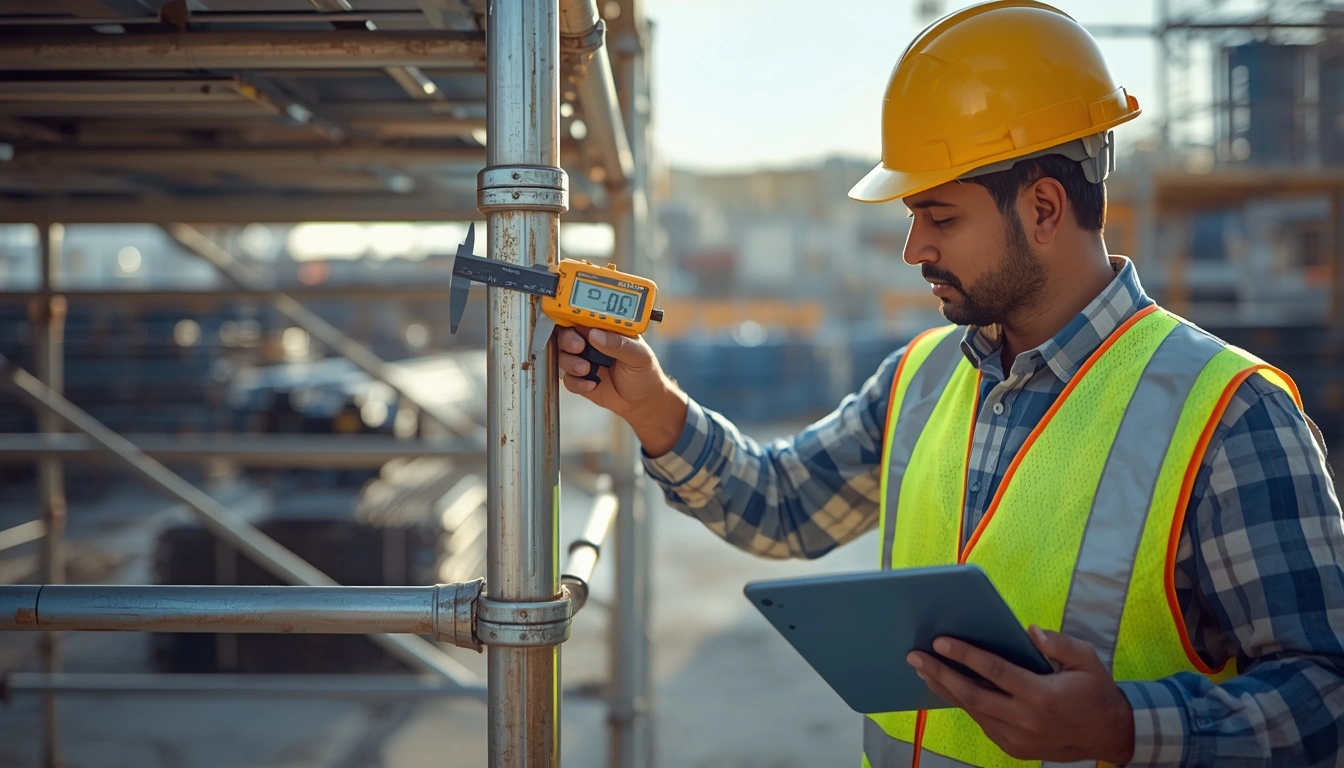
- Validate Material Certifications and Vendor Engineering Support: Specialized access demands certified equipment. Verify that aluminum mobile towers strictly adhere to EN 1004 standards and that fiberglass units carry verified dielectric strength ratings. Choose a rental partner that provides site-specific load drawings and deployment oversight, rather than just delivering hardware to the gate.
By prioritizing environmental physics and material compliance over basic rental costs, procurement officers can fully eliminate systemic safety risks, keeping both specialized workers and active industrial assets perfectly protected.
Contact Sri Kanakadri Scaffolding Today!
Phone: +91 9113276916
Visit our Google My Business Listing for Directions

About Sri Kanakadri Scaffolding Author – Sri Kanakadri provide Bangalore’s most reliable scaffolding on rental services, offering safe, cost-effective, and top-quality scaffolding rental solutions for all construction projects. With years of expertise, Sri Kanakadri Scaffolding is committed to delivering exceptional scaffolding on rental services in Bangalore that exceed client expectations. Our focus is on safety, quality, and affordability for every construction project. e specialize in scaffolding hire in Bangalore, offering reliable and cost-effective scaffolding rental solutions tailored to your needs. From construction scaffolding services to industrial scaffolding on rent, we ensure precision, safety, and efficiency in every project. Trust us for affordable scaffolding rentals that guarantee unmatched professionalism and reliability.