Overhead Atrium Access: Designing Rolling Bridge Platforms for Commercial Tech Parks
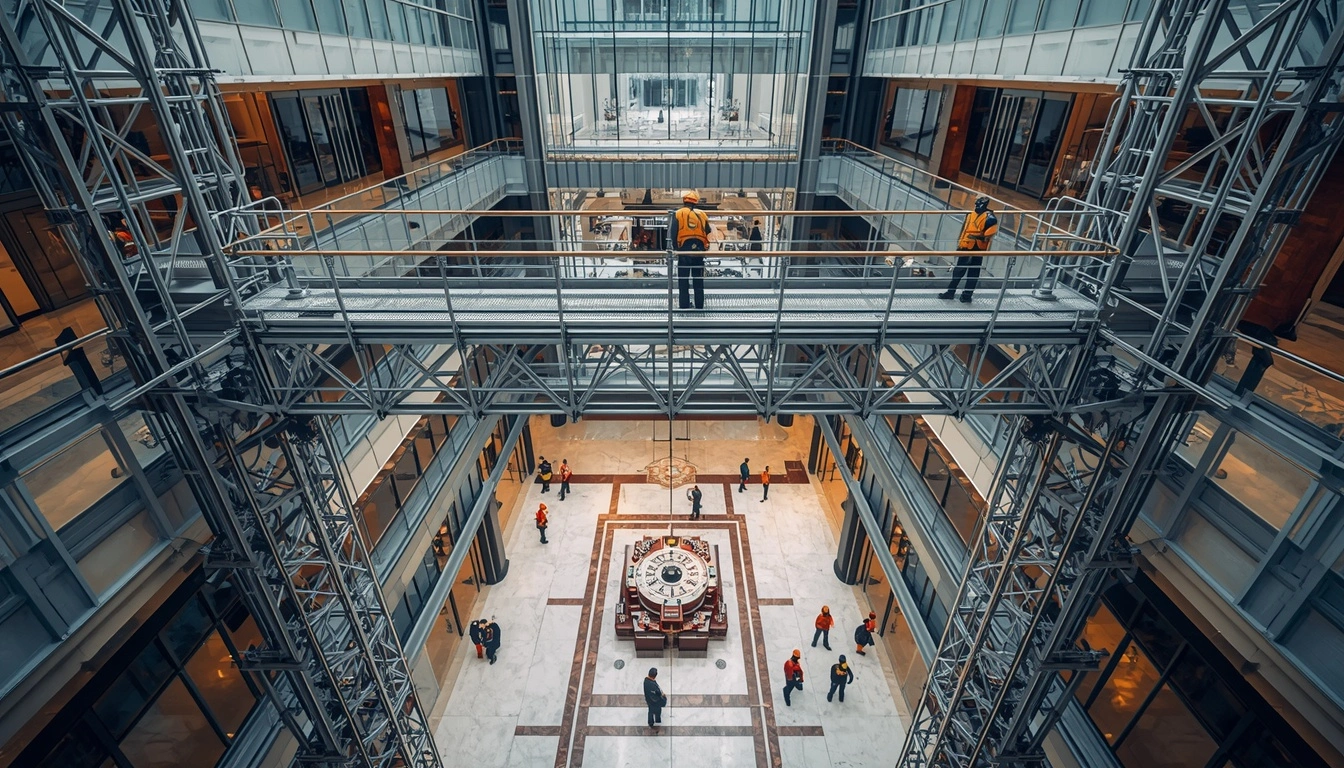
Bangalore’s massive IT corridors from Whitefield to the Outer Ring Road are known for their impressive commercial architecture. However, maintaining the sprawling glass lobbies and high-ceiling voids in these tech parks presents a serious logistical challenge for facility managers. Reaching a 50-foot ceiling to clean a skylight or change an HVAC unit usually means building a massive steel tower from the ground floor up. Doing so blocks daily foot traffic, forces temporary lobby closures, and risks crushing expensive marble or epoxy flooring under tons of metal. To solve this, engineering teams use horizontal spanning systems rather than building vertically from the ground up. By utilizing a rolling bridge scaffolding Bangalore service, building managers can achieve safe, non-disruptive access directly over indoor voids. This guide explores how these traveling platforms work, the engineering behind them, and why they are the ultimate solution for commercial atrium maintenance. The Logistical Nightmare of Indoor Void Maintenance When it is time to perform routine skylight cleaning or essential HVAC maintenance in a high-rise lobby, facility managers face a significant logistical hurdle. Traditional construction access methods simply do not work well indoors. If a contractor attempts to build a standard ground-up scaffolding tower to reach a 50-foot ceiling, the process will take days to assemble and dismantle. This creates a massive physical barricade that disrupts daily foot traffic, forces temporary closures of commercial zones, and creates an unsightly environment for corporate tenants. Because of these severe disruptions, securing a specialized atrium scaffolding rental is not just about reaching a height; it is about keeping the building fully operational while work occurs overhead. Common Mistakes: The Danger of Heavy Steel Indoors One of the most critical errors a contractor can make is attempting to use standard, heavy-duty steel scaffolding inside a commercial tech park. Standard outdoor steel frames are incredibly heavy. When stacked 40 or 50 feet high, the combined weight concentrates massive force into the base plates. This intense pressure can easily crack expensive marble, crush delicate epoxy flooring, and exceed the structural load limits of suspended lobby floors. Furthermore, carrying heavy, dirty steel pipes through pristine corporate environments often leads to property damage and wall gouges before the assembly even begins. Key Insight: To protect the building and keep foot traffic moving, facility managers must abandon ground-up heavy steel towers and utilize systems that span the empty void from above. What is a Rolling Bridge Scaffold? When facility managers need to access the ceiling above a wide, empty space like a massive escalator bank, a decorative water feature, or a fragile reception desk they rely on a highly specialized engineering solution. A rolling bridge scaffold, frequently referred to in the industry as a traveling gantry scaffold, is designed specifically to conquer this exact problem. Instead of building a single massive tower from the ground floor up, this system utilizes two separate, independent support towers. These parallel mobile towers are erected on solid, safe ground on either side of the obstacle. A high-strength horizontal work platform is then securely locked between them, effectively creating a sturdy bridge over the empty void. Because the base towers are equipped with heavy-duty casters, the entire suspended staging can be moved as a single, cohesive unit. Technicians can start at one end of a glass atrium, service a row of lights, and simply roll the traveling platform forward to the next section without having to climb down or dismantle the frame. This horizontal span technology transforms a disruptive, multi-day maintenance project into a seamless operational task. By eliminating the need for ground-level support in the center of the room, the bridge platform has become the absolute standard for modern commercial indoor maintenance. The Engineering Behind Aluminum Lattice Beams Spanning a wide gap without floor support requires precise material science. If a contractor attempts to build indoor void access platforms using standard, heavy-duty steel scaffold tubes, the system will fail. Under their own immense weight, long steel pipes will bend and sag in the middle a structural failure known as exceeding the deflection limit. To conquer this, engineers use high-strength aluminum lattice beams. A lattice beam utilizes a woven, triangular internal structure (similar to the boom of a construction crane) to distribute weight evenly across the entire span. This exceptional tensile strength and load-bearing capacity allows the rolling bridge to safely bridge gaps of up to 10 meters without any dangerous sagging, easily supporting multiple technicians and their tools. Furthermore, aluminum is the absolute standard for lightweight engineering. Just as advanced metal profiles are mandatory for sterile environments (which you can learn more about in our guide to cleanroom scaffolding in Bangalore), the ultra-light nature of aluminum lattice beams is exactly what allows this massive bridge structure to roll smoothly across fragile commercial floors without causing damage. Protecting Commercial Infrastructure During Operations When deploying tech park maintenance scaffolding, the primary concern for any facility manager is protecting the building itself. Commercial lobbies often feature imported marble floors, high-gloss epoxy, or delicate decorative tiling that simply cannot withstand the crushing force of heavy construction equipment. This is where the structural design of a rolling bridge platform becomes essential. By suspending the horizontal work platform between two separate mobile towers, the system effectively distributes the total weight of the equipment and the workers over a much larger surface area. This intelligent weight distribution significantly reduces the “point load” the specific amount of pressure exerted on a single square inch of the floor beneath the wheels. Furthermore, standard rubber wheels or rough metal base plates are strictly prohibited in these pristine environments. High-end rolling bridges are equipped with specialized non-marking polyurethane casters. These advanced wheels glide smoothly over delicate surfaces without leaving stubborn black scuff marks, dropping debris, or causing micro-fractures in expensive tile. Expert Tip: Understanding Point Loads on Marble Lobbies Before bringing any equipment indoors, always ask your scaffolding engineer for a point load calculation. A standard commercial marble tile can typically handle about 250 PSI (pounds per square inch) before