
Formwork Stripping Cycles: Using Drop-Head Systems to Speed Concrete Pours
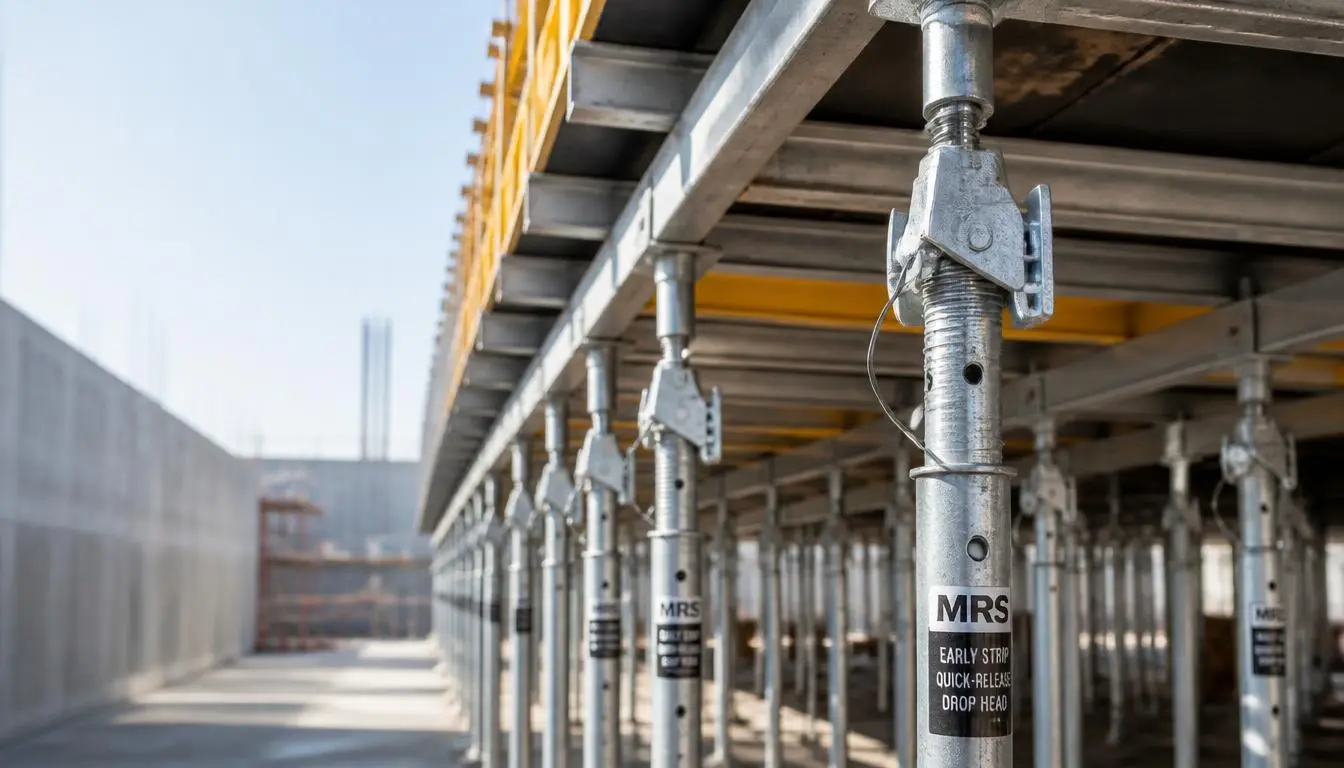
Managing your formwork stripping time as per IS 456 rules is the true secret to keeping a commercial building project moving fast without risking structural safety. Stripping your under-slab supports too early can cause cracks or sagging, but leaving your equipment locked in place for weeks stalls your crew and drives up rental bills. By utilizing a modular early stripping shoring system equipped with quick-release drop-head components, contractors can safely reclaim their plywood sheets and horizontal beams just days after a pour. This guide explains how to blend concrete curing timelines with modern drop-head mechanics to optimize your layout without cutting safety corners. [Concrete Pour] ──> [Hydration & Heat Generation] ──> [Reaches Compressive Milestone] ──> [Safe Early Strike] When concrete is freshly poured, the raw chemical mix undergoes hydration, slowly building up its internal density and load-bearing strength over several days. Stripping your shuttering sheets too early interrupts this strength-building process, subjecting the immature deck to extreme pulling forces it cannot handle. This mistake leads to microscopic cracks, permanent floor dips, and sudden structural failures. To plan a safe layout rotation without delaying your project timeline, check out our comprehensive guide on Slab Formwork Scaffolding Rental Bangalore Systems. Slab Concrete Deshuttering Periods: Props vs. Soffit Panels A common point of confusion for on-site supervisors is the distinct difference between stripping the horizontal face panels and removing the main vertical props. When evaluating the minimum stripping time for concrete slab formwork, the code divides the process into two separate structural stages to help accelerate your construction cycle safely. Slab Deshuttering Rule: According to IS 456:2000, the minimum stripping time for concrete slab formwork requires stripping the soffit formwork panels after 3 days, provided the vertical props are immediately re-propped underneath the exposed concrete. [Stage 1: Day 3] ──> Strike Soffit Panels (Plywood / Sheets Reclaimed) [Stage 2: Day 7 to 14] ──> Remove Vertical Props (Based on Floor Span Length) This early strike step is safe because the flat soffit panels only hold up the local surface area of the concrete. Once the mix hits its 3-day compression strength milestone, the flat plywood sheets can be lowered and moved out. However, the main vertical props which carry the total downward weight of the entire room span must remain tightly locked in place much longer. For standard room spans up to 4.5 meters, the props must stay for at least 7 days. For wide spans exceeding 4.5 meters, those vertical supports cannot be touched for a minimum of 14 days. The Mechanics of Speed: How Drop-Head Systems Accelerate Pours To meet tight commercial deadlines without violating code timelines, smart contractors rely on an early stripping shoring system. The core component behind this method is the specialized modular drop-head mechanism. Instead of locking the horizontal beams and vertical props together as a single rigid frame, drop-head scaffolding components separate these two elements visually and mechanically. [Normal State: Wedge Tight] [Struck State: Wedge Released] ┌───────────────────────┐ │ Plywood / Deck Sheet │ ┌─── (Plywood Drops 100mm) ───┐ └───────────────────────┘ └─────────────────────────────┘ ▲ [Drop-Head Plate] ▲ [Drop-Head Plate] ║ ║ ║ (Dropped Down) ═══╬═════════════════════╬═══ ═══════════╬═════════════ ║ [Horizontal Beam] ║ ║ [Horizontal Beam] ║ ║ ║ ───╨───────[Prop Head]───╨─── ───╨───────[Prop Head]───╨─── │ │ │ │ The device works using a simple quick-release wedge pin or drop-plate assembly located at the top of the vertical support pipe. During assembly, the head is driven up and locked, raising the horizontal support plates flush with the top of the vertical standard. This allows the horizontal beams and plywood shuttering sheets to form a smooth, flat deck surface. After 3 days of curing, a worker strikes the quick-release drop-pin with a hammer. The drop-head plate instantly slides down by roughly 100mm, lowering the primary horizontal beams and plywood panels so they can be removed. Crucially, the central vertical standard pipe remains perfectly undisturbed, staying tightly wedged against the concrete ceiling to keep the slab supported during its final curing stages. How to Reduce Formwork Cycle Times Safely Every project manager wants to know how to reduce formwork cycle times safely to lower equipment rental costs. The fastest way to achieve this is through an optimized shuttering panel rotation plan, which keeps your materials moving rather than sitting idle on a cured floor. When you use a traditional support setup, your entire inventory of props, beams, and sheets is locked under a single floor slab for 10 to 14 days. This forces you to rent double or triple the amount of material if you want to start work on the next level. By introducing drop-head adapters into your staging layout, your team can strip and recover up to 70% of the horizontal framing components within 72 hours. While the vertical shoring props stay behind to carry the curing load, the freed-up plywood and horizontal runners are shifted straight to the upper deck. This quick rotation allows you to maintain a fast, continuous building pace using a fraction of the rental inventory. Common Errors: Stripping Blended Cements Prematurely Without Cube Tests The most dangerous field error on modern job sites is failing to adjust the minimum stripping time for concrete slab formwork when working with modern eco-blended cements. While older construction guides