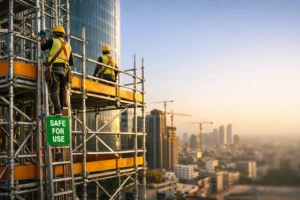
 Safety compliance in the Indian construction sector has evolved from a voluntary best practice into a critical legal mandate. As cities like Bangalore witness unprecedented urbanization, the complexity of work-at-height activities has grown exponentially.
Adhering to scaffolding safety standards in India, specifically the IS 2750 code, is now the only way to ensure structural integrity and mitigate site risks.
This guide provides an authoritative roadmap through regulatory compliance, safety certifications, and the expert training required to master modern construction safety in the 2026 landscape.
Understanding IS 2750: The Backbone of Indian Scaffolding Standards
What is IS 2750? IS 2750 is the Bureau of Indian Standards (BIS) code that specifies the requirements for steel scaffoldings. It covers material quality, dimensions of tubes, and the structural design necessary to ensure the safety of workers at height in India.
The IS 2750 standard isn’t just a technical manual; it is the legal foundation for every steel scaffold erected in the country.
While many international contractors in Bangalore look toward OSHA (Occupational Safety and Health Administration) for global guidance, IS 2750 is specifically calibrated to the materials and environmental stresses found in the Indian subcontinent.
While OSHA focuses heavily on the “process” and management of safety, the Indian IS 2750 scaffolding specifications are deeply rooted in the structural integrity and metallurgical quality of the individual components.
Key Technical Specifications of BIS 2750
To meet Indian standards for tubular scaffolding, contractors must look beyond the visual assembly and focus on material metrics. The code primarily dictates the use of Grade YST 210 or YST 240 Black Mild Steel (MS) pipes.
For a structure to be deemed compliant, the standard nominal bore (NB) of the tubes must be 40mm, resulting in an outer diameter of approximately 48.3mm.
A critical data point often overlooked by site supervisors is wall thickness. Under BIS 2750, the tube thickness must generally be either 3.25mm (Medium) or 4.0mm (Heavy), depending on the intended load-bearing capacity.
Using “light” pipes with lower wall thickness is a common but dangerous violation; it significantly compromises the scaffold’s ability to handle vertical compression and lateral wind pressure—a major risk factor for high-rise clusters in areas like North Bangalore.
Key Insight: Adhering to these specific dimensions ensures that all standard couplers and fittings lock seamlessly. Mechanical failures often occur not because a part was “broken,” but because mismatched pipe diameters prevented the fittings from achieving a secure grip.
Core Safety Components: Engineering a Fail-Safe Structure
Engineering a safe scaffold requires more than just high-quality steel; it requires a holistic approach to the assembly of individual components. In the industry, we often speak of a “fail-safe” structure.
This means that if one component is slightly stressed, the system as a whole remains stable because the construction scaffolding safety norms were followed during the initial design and erection. Every ledger, transom, and brace must work in harmony to prevent structural collapse.
The Role of Base Plates and Sole Boards in Soil Stability
The safety of any scaffold begins at the ground level. A common oversight on Bangalore sites is ignoring ground conditions, especially during the monsoon season when the earth becomes soft and unpredictable.
Scaffolding base plate safety is critical because the base plate is responsible for transferring the entire weight of the structure and its occupants into the earth. However, on soft or uneven terrain, a steel base plate alone is insufficient.
In such cases, we use sole boards—wide timber or steel planks placed under the base plates—to further distribute the load across a larger surface area.
Without proper load distribution, the vertical “standards” can sink into the ground, causing a disastrous tilt. In areas like Sarjapur or Hebbal, where construction often happens on reclaimed land, using a combination of adjustable base jacks and heavy-duty sole boards is not just a recommendation; it is a necessity for structural survival.
Guardrails and Toe Boards: Preventing Fall Hazards
Falls from height remain the leading cause of construction fatalities. To achieve effective scaffolding fall protection, the installation of guardrails and toe boards is non-negotiable. According to IS code safety benchmarks, a standard guardrail system must include:
- Main Guardrail: Fixed at a height of 950mm to 1200mm above the working platform.
- Mid-rail: Positioned so that the gap between the toe board and the main rail does not exceed 470mm.
- Toe Boards: Must be at least 150mm high to prevent tools or materials from accidentally being kicked off the edge onto people below.
Key Insight: Never use scrap wood or thin wires as substitutes for proper guardrails. A compliant system must be rigid enough to withstand the weight of a worker leaning or falling against it without bending or dislodging from the standards.
The Human Element: Training and the “Competent Person” Role
Even the most technologically advanced scaffold, built with the highest-grade IS 2750 steel, is only as safe as the people who assemble and use it. In the construction industry, we emphasize that safety is a shared responsibility, but the legal and structural burden rests on the shoulders of the “Competent Person.”
Under scaffolding safety training in India, a competent person is defined as someone capable of identifying existing and predictable hazards and who has the specific authorization to take prompt corrective measures to eliminate them.
Expert Tip: In 2026, Bangalore municipal authorities and major developers often require Third-Party Inspection (TPI) for projects exceeding 15 meters. Never rely solely on an internal audit for high-rise steel structures; ensuring your supervisor is a certified “Competent Person” is your first line of defense against legal liability.
Mandatory Training Modules for Site Workers
Proper scaffolding safety certification isn’t a one-time event but a continuous process of education. For workers in Bangalore’s fast-paced hubs like Manyata Tech Park or Electronic City, training must be practical and language-accessible. Essential training modules should include:
- Assembly & Dismantling Sequence: Understanding the step-by-step logic to ensure the structure never becomes unstable during the “build” or “teardown” phases.
- Load Recognition: Teaching workers to identify the difference between light-duty and heavy-duty loads to prevent dangerous overstressing of the platforms.
- Hazard Identification: Spotting overhead power lines, identifying corroded pipes, and checking for unstable ground before work begins.
- Fall Arrest Usage: Proper donning of safety harnesses and the correct method of anchoring to secure points.
Key Insight: Training reduces “human error,” which accounts for over 80% of scaffolding-related incidents. When a worker understands the why behind a safety tag or a guardrail, they are far more likely to maintain the integrity of the scaffold throughout the project lifecycle.
The Scaffolding Tagging System: Inspection & Maintenance
A scaffolding tagging system is the primary communication tool on any construction site. It provides a visual, real-time status of whether a structure is safe for use, undergoing maintenance, or is a hazardous zone.
Without a standardized tagging protocol, workers might inadvertently step onto a half-finished platform or an unstable structure, leading to catastrophic accidents. In Bangalore’s high-pressure construction environments, this color-coded language is the universal standard for a successful safety audit.
| Tag Color | Meaning | Action Required |
| Red Tag | Unsafe / Danger | DO NOT CLIMB. The scaffold is incomplete, damaged, or undergoing dismantling. |
| Yellow Tag | Caution / Under Modification | RESTRICTED ACCESS. Only authorized erectors are permitted for building or modification. |
| Green Tag | Safe for Use | PROCEED. The scaffold has passed inspection and is ready for general trade use. |
Daily Inspection Protocols for Site Supervisors
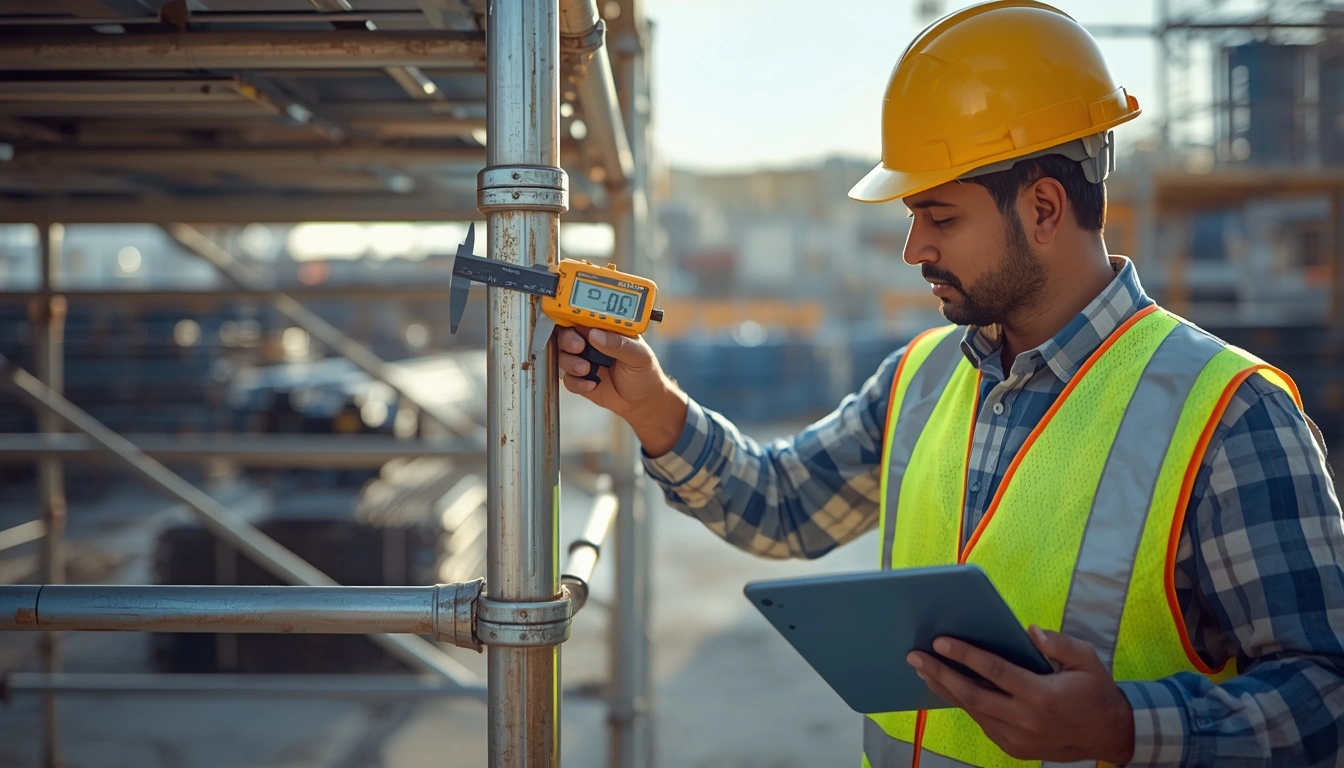
A tag is only as reliable as the last inspection. A technical scaffolding inspection checklist should be the first document a site supervisor picks up at the start of every shift.
Environmental factors in Bangalore—such as sudden heavy rain or vibrations from nearby piling work—can shift base plates or loosen couplers overnight.
A robust daily protocol must include:
- Structural Integrity Check: Ensuring all ledger and diagonal braces are in place and standards remain vertical.
- Bolt Tightening: Manually checking that right-angle and swivel couplers are torqued correctly to prevent slipping.
- Access Verification: Ensuring ladders are secured at a 4:1 ratio and the entry points are clear of debris.
- Tie-in Check: Confirming the scaffold remains firmly anchored to the building structure to prevent swaying or tipping.
Key Insight: Inspections should occur every 7 days at a minimum, or immediately following any adverse weather event or structural modification. For a more detailed breakdown of these steps, you can refer to our specialized guide on the Daily Scaffolding Inspection Checklist.
High-Rise and Infrastructure: Specialized Safety Challenges
As Bangalore’s skyline stretches upward, particularly in high-density corridors like North Bangalore and the Outer Ring Road, the risks associated with high-rise scaffolding safety multiply.
Unlike low-rise residential projects, high-rise and large-scale infrastructure projects such as the Namma Metro (BMRCL) flyovers—deal with immense gravitational loads and unpredictable environmental forces.
When working at these heights, the scaffold is no longer just a platform; it is a complex engineering structure that must account for cantilevered sections and heavy-duty shoring requirements.
One of the most significant challenges in infrastructure projects is the “cantilever” scaffold, often used when the ground below cannot be blocked (such as over live traffic). These structures require precise anchoring and a deep understanding of structural counterweights.
Without rigorous engineering oversight, these sections are susceptible to tipping. Similarly, on Metro projects, scaffolding must be vibration-resistant to handle the constant movement of heavy machinery and nearby traffic, necessitating the use of specialized locking pins and double-check couplers.
Wind Load Thresholds for Bangalore High-Rises
Wind is the silent enemy of high-rise structures. In areas like Hebbal or Devanahalli, wind speeds increase significantly as you move up each floor.
Wind load calculations are mandatory under IS 875 (Part 3) to ensure the scaffold doesn’t sway or “sail” away from the building.
For Bangalore-based projects, safety officers typically follow these thresholds:
- Up to 30 km/h: Normal operations.
- 30 km/h to 50 km/h: High alert. Loose materials must be secured, and “sail” effects from debris netting must be monitored.
- Above 50 km/h: Stop work immediately. All personnel must evacuate the scaffold, and the structure must be inspected for stability before work resumes.
Key Insight: For heights above 30 meters, the scaffold must be “tied” to the building at more frequent intervals than standard structures. Using through-ties or box ties ensures that the wind pressure is transferred directly into the building’s concrete core rather than stressing the scaffold joints.
Common Compliance Mistakes & How to Avoid Them
Even with a strong understanding of IS 2750, high-pressure deadlines on Bangalore sites often lead to critical scaffolding safety mistakes. During Third-Party Inspections (TPI), we frequently see patterns of negligence that could easily be avoided with better oversight. Recognizing these “red flag” behaviors is the first step toward maintaining a 100% compliant site.
Here are the top five compliance failures found in the field:
- Overloading Platforms: Exceeding the intended weight capacity is a leading cause of structural failure. Workers often store heavy masonry or steel bundles on a single bay, not realizing that scaffolds are rated for specific loads (Light, Medium, or Heavy Duty).
- Missing Diagonal Braces: Many erectors omit diagonal “cross” bracing to save time or to make it easier to walk through the scaffold. Without these braces, the structure loses its lateral stability and can sway or collapse under wind pressure.
- Improper Ties and Anchors: A scaffold is not a self-supporting tower; it must be tied to the building. Using weak wires or insufficient “box ties” instead of mechanical anchors is a major violation that leads to the structure pulling away from the facade.
- Inadequate Foundations: Using bricks, loose stones, or scrap wood instead of a proper base plate and sole board is an immediate fail. This leads to uneven settlement and structural tilting.
- Working on Red-Tagged Scaffolds: Perhaps the most dangerous mistake is workers ignoring the tagging system and climbing a structure that has been marked as “Incomplete” or “Unsafe.”
Key Insight: Safety is cheaper than a shutdown. Avoiding these mistakes isn’t just about passing an audit; it’s about preventing the catastrophic downtime and legal repercussions that follow a site accident. Always empower your safety officers to stop work immediately if a “red flag” is spotted.
FAQs: People Also Ask (2026 Edition)
What is the primary scaffolding safety standard in India?
The primary standard is IS 2750, a Bureau of Indian Standards (BIS) code that dictates the material quality, design, and structural safety requirements for steel tubular scaffolding. All commercial construction in India must comply with this code to ensure structural integrity and legal safety.
Who is considered a “Competent Person” for scaffolding in India?
A “Competent Person” is a certified professional with the technical expertise to identify scaffolding hazards and the legal authority to take corrective action. In India, this usually refers to a site supervisor or engineer who has completed recognized scaffolding safety training and understands IS 2750 structural requirements.
What is the mandatory inspection frequency for construction scaffolding?
Scaffolding must be inspected every 7 days at a minimum. Additionally, immediate inspections are required after any structural modifications, long periods of non-use, or adverse weather conditions like Bangalore’s heavy monsoon rains.
What are the three types of scaffolding safety tags used in India?
The three standard tags are: Green (Safe for Use), Yellow (Caution/Under Construction), and Red (Unsafe/Danger). Workers must never climb a scaffold without a valid, signed Green tag displayed at the access point.
How does IS 2750 differ from OSHA scaffolding standards?
While OSHA (US) focuses heavily on safety management processes, IS 2750 (India) focuses on the technical metallurgy and dimensions of steel components (e.g., 40mm NB pipes). For Indian projects, IS 2750 is the legal mandate, though OSHA is often used as a supplementary “best practice” framework.
What is the required height for scaffolding guardrails under Indian norms?
According to safety benchmarks, the main guardrail must be positioned between 950mm and 1200mm above the platform. A mid-rail must also be installed so that no vertical gap exceeds 470mm, preventing workers from slipping through.
Are toe boards mandatory for all scaffolding platforms?
Yes. Toe boards must be at least 150mm high and installed on all open sides of a platform. Their primary purpose is to prevent tools, debris, or materials from being accidentally kicked off the edge, protecting personnel working below.
What wind speed requires a scaffolding work stoppage in Bangalore?
In high-rise construction, work must stop if wind speeds exceed 50 km/h. Between 30-50 km/h, site supervisors must secure all loose materials and monitor the structure for “sail effects” caused by safety netting or debris mesh.
Why are sole boards necessary for scaffolding in Bangalore?
Sole boards are timber or steel plates placed under base plates to distribute the scaffold’s load over a wider surface area. They are essential on Bangalore sites to prevent base plates from sinking into soft or rain-soaked soil, which leads to structural tilting.
What is the legal liability for scaffolding accidents in Karnataka?
Under the Building and Other Construction Workers (BOCW) Act, contractors and developers are legally liable for accidents resulting from non-compliance. Failure to adhere to IS 2750 standards can result in heavy fines, project shutdowns, and criminal negligence charges.
What steel grade is required for IS 2750 compliant scaffolding?
IS 2750 requires the use of Black Mild Steel (MS) tubes of Grade YST 210 or YST 240. These grades ensure the pipes have the necessary tensile strength to handle both vertical loads and lateral environmental pressures.
What is a Third-Party Inspection (TPI) in scaffolding?
A TPI is an independent safety audit conducted by an external agency to verify that a scaffold meets all IS 2750 and project-specific safety norms. In Bangalore, TPI is often mandatory for high-rise projects exceeding 15 to 20 meters in height.
How does monsoon weather affect scaffolding safety in India?
Monsoons increase the risk of rust, base plate subsidence (sinking), and wind-related swaying. In Bangalore, safety protocols require checking the “tightness” of all couplers and the stability of the ground foundations immediately following heavy rainfall.
What is the maximum load capacity for a standard metal scaffold?
Load capacity depends on the duty rating: Light Duty (225kg/m²), Medium Duty (450kg/m²), and Heavy Duty (675kg/m²). Project managers must ensure that the weight of workers and materials does not exceed the scaffold’s engineered rating.
Does BBMP require specific safety permits for roadside scaffolding?
Yes. When erecting scaffolding near public roads or pedestrian paths in Bangalore, BBMP (Bruhat Bengaluru Mahanagara Palike) requires permits to ensure public safety. This often includes installing protective canopies and high-visibility safety mesh.
Practical Action Steps for Project Managers
For project managers on Bangalore’s high-velocity construction sites, safety is not just a moral obligation it is a critical factor in project timelines and financial health. A single safety violation can lead to work-stop orders from authorities or, worse, a catastrophic failure that halts operations for months. Implementing a scaffolding safety audit is the most effective way to transition from reactive crisis management to proactive structural assurance.
Effective site leadership requires moving beyond the “rental shop” mindset. Instead of simply procuring pipes and planks, project managers must treat scaffolding as a mini-design package that requires an implementation plan and a rigorous procurement checklist. By standardizing these checks, you create a repeatable safety culture that remains robust even as crews rotate or project phases shift.
5-Step Action Plan for Immediate Site Improvement
To elevate your site’s safety standards immediately, follow this 5-step implementation roadmap:
- Conduct a Mandatory Scaffolding Safety Audit: Walk the site today. Identify any red-tagged or un-tagged structures and ensure that every access point is clear and secure.
- Verify Competent Supervision: Review the credentials of your lead erectors. Ensure your “Competent Person” is certified and understands the specific requirements of IS 2750.
- Formalize the Handover Process: Never allow crews to climb a newly erected scaffold until you have received a signed Handover Certificate. This document confirms the structure is built to the engineered design.
- Enforce the Tagging Protocol: Make it a “zero-tolerance” rule that no worker steps onto a platform without a visible, signed Green Tag.
- Review Ground Stability (Monsoon Check): Given Bangalore’s soil conditions, ensure every base plate is on a firm sole board and that the site has adequate drainage to prevent foundation softening.
Key Insight: Safety is an investment that pays dividends in “uptime.” When you lead with a clear safety framework, you attract better-skilled labor and gain the trust of Tier-1 developers and government bodies like BMRCL.
Conclusion: Scaling Safely in Bangalore’s 2026 Construction Landscape
As Bangalore’s vertical expansion continues, the margin for error in site safety becomes razor-thin. Adhering to scaffolding safety standards in India is no longer just about ticking boxes for an inspector; it is about building a resilient, professional, and engineering-led construction ecosystem. By mastering IS 2750 compliance, implementing rigorous scaffolding tagging systems, and empowering a “Competent Person” on every site, project managers can ensure that their developments reach new heights without compromising the lives of those building them.
The transition from a “rental” mindset to a “safety-first” philosophy is what distinguishes market leaders in 2026. Whether you are managing a high-rise in Whitefield or a metro flyover on the Outer Ring Road, the principles of structural integrity and regular audits remain your strongest defense against risk. Start today by reviewing your site’s scaffolding inspection checklist and ensuring that every piece of equipment on your site—from the base jack to the guardrail—meets the high bar set by the Bureau of Indian Standards.
Final Takeaway: Safety is a continuous journey. Stay updated with the latest KSPCB and BBMP safety norms to ensure your projects remain as legally sound as they are structurally stable. For more specialized insights into specific equipment, explore our technical guides on Cuplock Scaffolding Advantages and Double Pole Assembly.

About Sri Kanakadri Scaffolding Author – Sri Kanakadri provide Bangalore’s most reliable scaffolding on rental services, offering safe, cost-effective, and top-quality scaffolding rental solutions for all construction projects. With years of expertise, Sri Kanakadri Scaffolding is committed to delivering exceptional scaffolding on rental services in Bangalore that exceed client expectations. Our focus is on safety, quality, and affordability for every construction project. e specialize in scaffolding hire in Bangalore, offering reliable and cost-effective scaffolding rental solutions tailored to your needs. From construction scaffolding services to industrial scaffolding on rent, we ensure precision, safety, and efficiency in every project. Trust us for affordable scaffolding rentals that guarantee unmatched professionalism and reliability.