
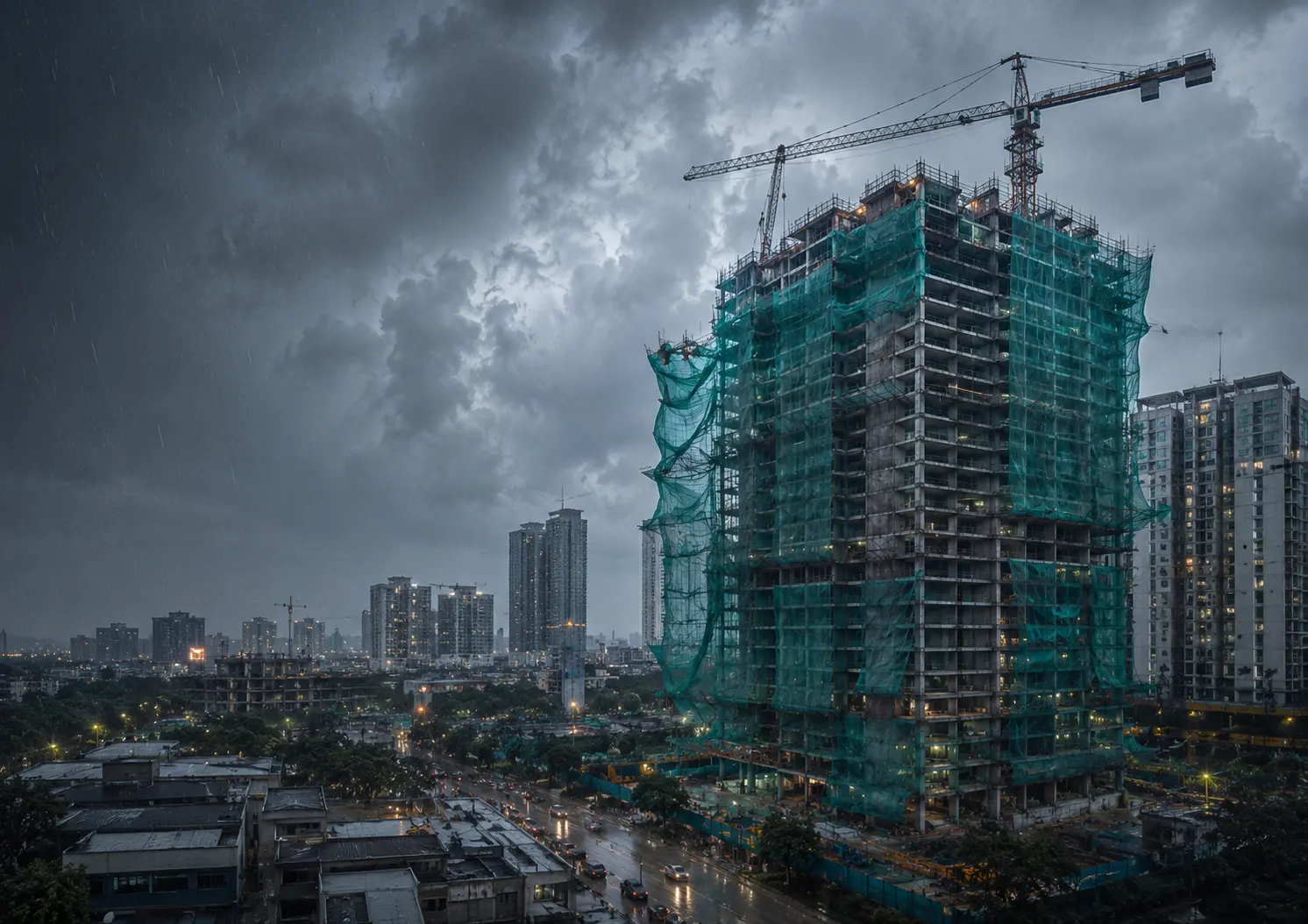
Monsoon Scaffolding Safety: Protecting Bangalore Sites from Heavy Rain & Soil Sinking
Bangalore’s monsoon season brings more than just a break from the heat; it brings a serious test for every construction site in the city. Between June and September, the famous red laterite soil can flip from a solid foundation to a sinking hazard in a single afternoon. For site managers, monsoon scaffolding safety Bangalore isn’t just a line in a manual it’s the difference between a productive shift and a structural collapse. When water saturates the ground, it eats away at the stability of your rig, making proactive rain protection a top priority. The Danger of ‘Soft Ground’: Why Bangalore Soil Sinks During Rain That hard-packed red soil we see across Bangalore gives a false sense of security during the dry months. Once the heavy rains hit, the soil bearing capacity drops like a stone. When the earth becomes waterlogged, it loses the “grip” needed to support thousands of kilograms of steel and workers. This is the root cause of uneven settlement where one side of the scaffold sinks just a few centimeters more than the rest. That tiny shift is enough to throw the whole structure out of verticality, risking a total foundation failure. Sole Plates and Base Plates: Your First Line of Defense Preventing scaffolding from sinking starts with changing how you think about the foundation. In summer, a standard metal base plate works fine. In the monsoon, that plate acts like a needle in soft butter. To stay upright, you must use timber sole plates or steel spreaders to distribute that weight over a much larger area. By placing a thick timber plank under the metal base, you “float” the scaffold on top of the mud, keeping the poles from piercing the wet topsoil. For high-stakes projects in 2026, safety protocols now lean toward double-thickness sole plates on well-compacted ground. This level of care is a hallmark of advanced infrastructure scaffolding Bangalore standards. Without these plates, the vibration of daily work will eventually drive your structure into the mud as the rains get heavier. Key Insight: Never put a base plate directly on raw red soil during the monsoon. A sole plate is a structural bridge that turns a dangerous point-load into a safe, distributed weight. Managing Wind Loads during Bangalore’s Pre-Monsoon Thunderstorms The monsoon usually arrives with violent evening squalls. These thunderstorms bring high-velocity gusts that put massive lateral force on a scaffold. While scaffolds are built to hold weight down, they are surprisingly weak when pushed sideways. If your rig isn’t tied in correctly, these wind loads can pull the whole system away from the wall or cause the frame to buckle. To keep your scaffolding stability in heavy rain and wind, 2026 norms have upped the requirements for wind bracing. Standard diagonal braces aren’t enough for high-rises anymore. You now need high-tension plan bracing and more frequent “tie-ins” to the building. These act as anchors, stopping the wind from swaying the scaffold and keeping the couplings from vibrating loose during a storm. The ‘Sail Effect’: Safety Netting and Wind Stability One of the biggest hidden risks in scaffolding wind load safety is your green safety netting. It’s great for stopping falling tools, but it acts like a giant sail in a storm. This “sail effect” catches the wind and transfers all that pressure directly into the scaffold’s frame. Modern wind resistance strategies now use “releasable ties” or breakaway clips for all netting. These are designed to snap when the wind hits a dangerous speed, letting the netting flap freely instead of pulling the scaffold down. Keeping your lateral stability means making sure your debris netting doesn’t become your biggest liability during a June downpour. The 2026 Monsoon Safety Checklist for Site Managers By 2026, a verbal “it looks fine” won’t pass an inspection. To stay in IS 3696 compliance, you need a solid monsoon scaffolding safety checklist 2026. This is about proactive stability checks before anyone starts work. Heavy rain can change the safety of a site overnight, making daily inspections a hard requirement. Your checklist should focus on the ground and the anchors. Check that water is moving away from the base, that sole plates are still level, and that there’s no “puddling” near the legs. You also need to check the torque on couplings, as the high humidity can actually cause some joints to settle or loosen. Post-Storm Inspections: What to Check After a Downpour The impact of heavy rain on scaffolding is often invisible until it’s too late. After any big storm in Bangalore, a post-storm inspection is a must. Start with a plumb check to verify the verticality. Rain-soaked soil can cause a “lean” that’s hard to see without a level, but even a slight tilt drastically cuts the scaffold’s load capacity. Look for soil erosion under the base plates. Even with sole plates, running water can wash away the earth underneath, leaving the scaffold “floating.” Check every coupling and make sure the walkboards haven’t warped or become dangerously slippery. If the wind was high, double-check the wall ties; any movement there means the scaffold isn’t safely bonded to the building anymore. Key Insight: A post-storm inspection is a full re-certification. Don’t let anyone back on the platform until the plumb and verticality are verified by a pro. Corrosion & Rust: Maintaining Metal Integrity in High Humidity While sinking ground is the immediate worry, Bangalore’s humidity is a long-term threat. Constant moisture leads to oxidation, and without proper rust protection for scaffolding, steel components start to rot. Rust isn’t just ugly; it’s a sign the metal is losing its strength. Most quality rental fleets use galvanized steel with a Zinc coating to fight this off. However, that coating can wear thin at the joints and threads where metal rubs together. This leaves the raw steel open to the damp air. Pay close attention to coupling maintenance. The moving parts in couplers are magnets for joint seizure. Moisture gets into the threads, rusts, and “freezes” them. This makes it impossible