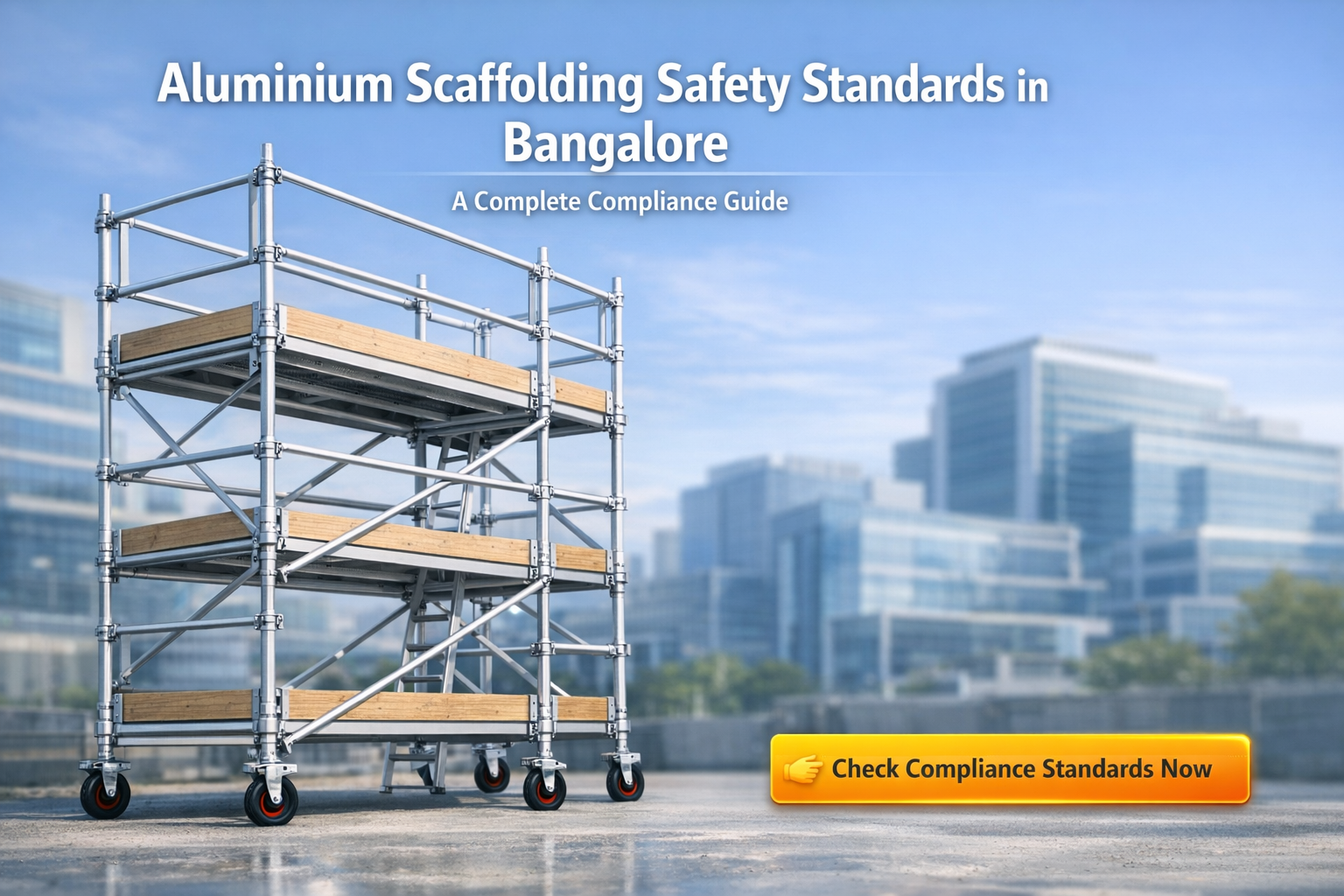
Aluminium Scaffolding Safety Standards in Bangalore: A Complete Compliance Guide
In the rapidly evolving skyline of Bangalore, from the tech hubs of Whitefield to the bustling residential pockets of Vijayanagar, construction safety has moved from a “best practice” to a legal and operational necessity. A common misconception among many contractors is that because aluminium is lightweight, it is inherently “simpler” or “safer” to manage than steel. However, the reality is that improper setup leads to significant site risks. This guide will walk you through everything you need to know about Aluminium Scaffolding Safety Standards in Bangalore, covering regulatory frameworks, load capacities, and how local experts like Sri Kanakadri Scaffolding are setting the benchmark for compliance. As Bangalore experiences a massive surge in infrastructure projects throughout 2025 and into 2026, staying updated on safety protocols is the only way to avoid heavy penalties and, more importantly, ensure worker well-being. Whether you are a site engineer or a facility manager, this complete compliance guide is your roadmap to accident-free operations. What Is Aluminium Scaffolding and Why Safety Standards Matter Before diving into the legalities, it is essential to understand what is aluminium scaffolding and why it has become the preferred choice for Bangalore’s urban maintenance and interior projects. Unlike traditional bamboo or heavy steel pipes, aluminium scaffolding consists of prefabricated modular components made from high-strength aluminium alloys. Why Aluminium is Preferred Over Steel Weight: Aluminium is approximately one-third the weight of steel, making it easier to transport through Bangalore’s narrow lanes. Corrosion Resistance: Given Bangalore’s humid climate and monsoon patterns, aluminium’s natural resistance to rust ensures a longer lifespan and structural integrity. Speed of Assembly: Modular towers can be erected in a fraction of the time, reducing labor costs on tight project timelines. The Stakes of Non-Compliance Despite these benefits, aluminium scaffolding safety standards exist because the material’s lightness makes it susceptible to wind loads and tipping if not correctly ballasted or braced. In a high-density urban environment like Bangalore, a scaffolding failure doesn’t just risk the worker; it risks the public and neighboring properties. Adhering to Aluminium Scaffolding Safety Standards in Bangalore ensures that the “lightweight” advantage doesn’t become a structural liability. For those looking to upgrade their site safety, exploring Sri Kanakadri Scaffolding aluminium scaffolding rental services is a strategic first step toward professional-grade equipment. Read More On: Guide for Aluminium Scaffolding Services in Bangalore Overview of Aluminium Scaffolding Safety Standards in Bangalore Bangalore presents unique challenges for scaffolding: uneven terrain in developing layouts, high-wind speeds on high-rise facades, and restricted space for base spreaders. Compliance in this city is not just about following a manual; it’s about adapting global safety logic to local site constraints. Local Construction Challenges High-Rise Density: As buildings go higher, the “chimney effect” of wind increases. Standard scaffolding must be reinforced with outriggers. Surface Variations: Many sites in Bangalore involve working on soft soil or uneven pavements, necessitating specific standards for base plates and adjustable legs. Power Line Proximity: Strict clearance standards must be maintained between the conductive aluminium frames and overhead Bangalore Electricity Supply Company (BESCOM) lines. Regulatory Framework Governing Aluminium Scaffolding Safety Compliance isn’t just a suggestion—it’s governed by a mix of national standards and local municipal safety norms. National & Industry Safety Guidelines Followed in Bangalore While India utilizes BIS (Bureau of Indian Standards) codes such as IS 4014, many modern aluminium systems in Bangalore also align with international standards like EN 1004. Key focus areas include: Material Quality: Ensuring the alloy used (often 6061-T6 or similar) meets tension and yield strength requirements. Design Ratios: Maintaining a height-to-base ratio that prevents tipping without the need for external ties (typically 3:1 for outdoor use). Safety Audits: Regular audits are becoming a staple for Grade-A developers in Bangalore to ensure that aluminium scaffolding safety regulation Bangalore is met at every floor level. Responsibilities of Contractors, Builders & Site Owners The onus of safety is shared. Contractors are responsible for the daily “Toolbox Talks” and assembly, while Site Owners are legally liable for providing certified equipment. Legal Consequences: Non-compliance can lead to work-stop orders from the BBMP or labor department. Insurance Risks: Most insurance providers will void a claim if it is discovered that Aluminium Scaffolding Safety Standards in Bangalore were ignored during an incident. Aluminium Scaffolding Load Capacity and Stability Guidelines One of the most critical aspects of Aluminium Scaffolding Safety Standards in Bangalore is understanding the “Safe Working Load” (SWL). Overloading is the leading cause of structural buckling. Factors Affecting Stability The 3-to-1 Rule: For free-standing towers in Bangalore’s outdoor conditions, the height should not exceed three times the minimum base dimension. Platform Loading: You must distinguish between “Light Duty” (inspecting) and “Heavy Duty” (carrying masonry or heavy tools). Castor Wheel Locking: On Bangalore’s often-sloped roads, ensuring all wheels are locked and the load is distributed over the screw jacks is vital. Expert Insight from Sri Kanakadri Scaffolding: “We often see sites where workers add extra planks to save time. This shifts the center of gravity and is a direct violation of load capacity guidelines. Always check the load sticker on the frame before ascending.” How to Inspect Aluminium Scaffolding for Safety Compliance Safety is not a “set it and forget it” task. To maintain Aluminium Scaffolding Safety Standards in Bangalore, a rigorous inspection routine is mandatory. Pre-Use Inspection Checklist Before any worker climbs, a “competent person” must verify: Verticality: Is the tower upright within a 1% grade? Bracing: Are all diagonal and horizontal braces “snapped” into place? Guardrails: Are both mid-rails and top-rails present at every working platform? Toe-boards: Are toe-boards installed to prevent tools from falling onto Bangalore’s busy sidewalks? Common Aluminium Scaffolding Safety Violations Seen in Bangalore Through years of providing Sri Kanakadri Scaffolding aluminium scaffolding rental services, we have identified recurring pitfalls that site managers should watch for: Improper Guardrails: Using a single rope instead of a rigid aluminium rail. Missing Outriggers: Failing to use “stabilizers” on towers taller than 4 meters. Unauthorized Modifications: Mixing components from different manufacturers, which may not lock together securely. The “Ladder Climb”