
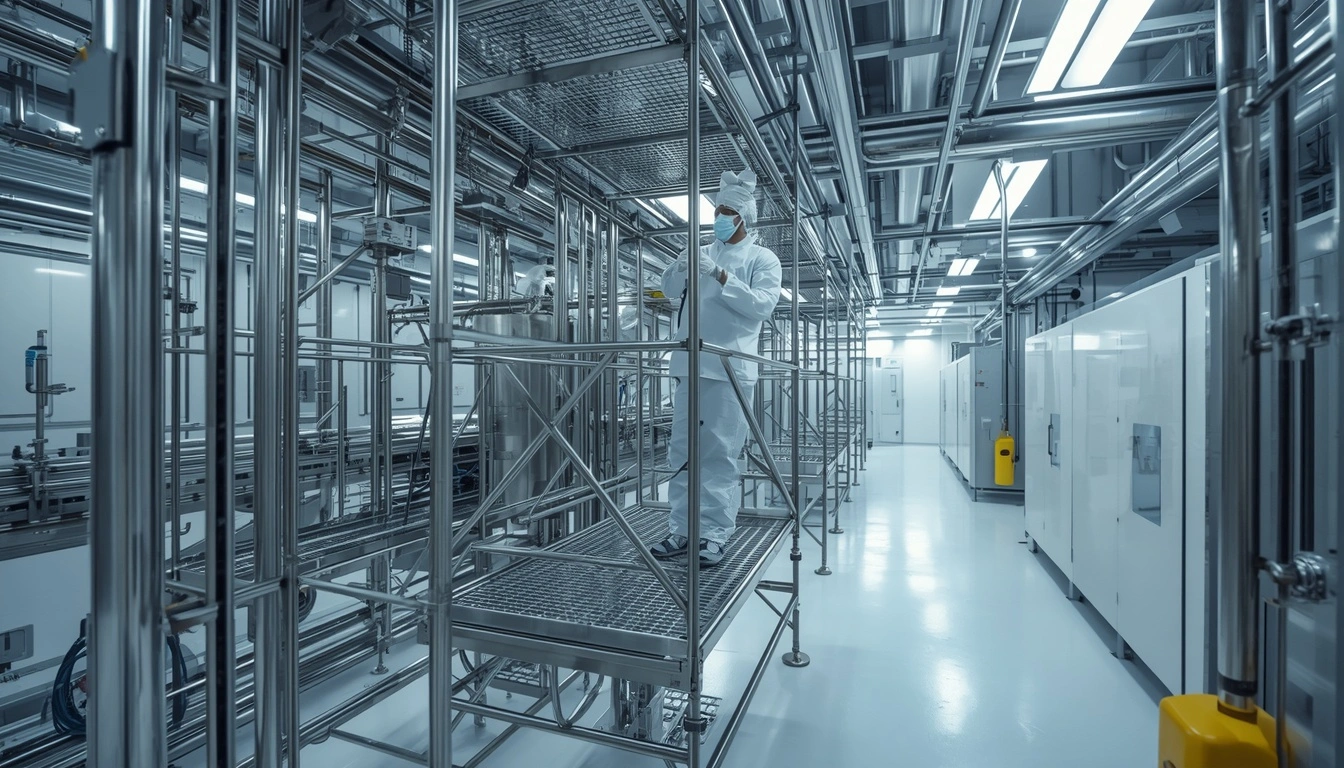
Cleanroom & Pharma Staging: Stainless Steel and Specialized Alloy Work Platforms
Bangalore has a growing pharma and biotech sector. Maintaining these buildings creates a unique challenge. You must keep the area perfectly sterile. You cannot bring painted construction equipment into a cleanroom. This breaks Good Manufacturing Practice (GMP) rules. Facility managers must rent specialized cleanroom scaffolding Bangalore services. Stainless steel staging is the only safe choice. It protects your ISO air purity during overhead work and keeps your production lines safe. The Threat of Material Contamination in Sterile Zones Standard metal frames are dangerous in sterile zones. Regular steel rusts over time. Factories paint standard staging to stop this rust. But, you cannot use painted or rusty metal when looking for scaffolding for pharmaceutical cleanrooms. When workers build standard frames, the metal parts rub together. This rubbing drops microscopic paint chips and dust into the air. You might not see this dust, but it will ruin an ISO 5 or ISO 8 cleanroom. If this dust falls into open vats, it ruins the whole product batch. The factory must then stop work, clean everything, and throw away the ruined goods. Key Insight: A single tiny flake of rust or paint can ruin a whole production run. Standard painted metals do not belong in a sterile area. Why Stainless Steel is the Gold Standard for Pharma Staging Cleanroom managers use advanced metals to stop dust and rust. A stainless steel scaffolding rental is not just strong metal. It is a special tool made for clean spaces. High-grade stainless steel (like 304 and 316) contains chromium. Chromium stops rust from forming. Factories also polish this metal using electricity. This process removes tiny bumps and makes the metal perfectly smooth. Bacteria and dirt simply cannot hide on this smooth surface. Withstanding Aggressive Chemical Sterilization Cleanrooms need harsh cleaning. Workers use strong bleach, alcohol, and vaporized hydrogen peroxide (VHP). Standard aluminum or steel melts and rusts under these chemicals. But specialized alloy scaffolding survives. High-grade stainless steel easily handles daily chemical washes. It will not break down or peel. Hygiene-Critical Applications in Food Processing Facilities Food plants in Bangalore follow similar strict rules. They need overhead maintenance for pipes and vents. Using stainless steel access platforms for food processing is a must. Workers often stand right above open food vats. Heavy-duty stainless staging ensures no rust or paint falls into the food. This keeps the plant safe and follows FDA rules. Key Takeaway: Smooth stainless steel survives harsh chemicals and drops zero dust. It is the absolute best choice for wet sterile spaces. Material Matchup: Stainless Steel vs. Aluminum in Cleanrooms Managers often mix up aluminum and stainless steel when searching for pharma scaffolding platforms. Both metals work in cleanrooms, but they do different jobs. Picking the wrong metal causes major problems. Aluminum is great for dry cleanrooms, like electronics labs. It is very light and easy to move. But aluminum cannot survive the harsh chemicals used in pharma plants. Stainless steel is a must for wet sterile spaces. It easily survives bleach and VHP. It also holds much more weight. It is not as strong as outdoor slab formwork scaffolding rental Bangalore, but it is the strongest metal available for indoor cleanrooms. Use this quick comparison to pick the right staging: Feature Stainless Steel (304/316) Aluminum Alloy Weight Heavy (Great for heavy tools) Very Light (Easy to move) Rust Defense Extreme (Survives harsh chemicals) Moderate (Melts under strong chemicals) Best Room Type Wet / Bio-Pharma / Food Plants Dry / Electronics / Semiconductors Cleaning Method Bleach, VHP, heavy washdowns Mild wipe-downs, UV light Key Takeaway: Do not use aluminum in a wet pharma lab. If you need to use harsh chemicals or lift heavy items, choose stainless steel. Maintaining GMP and ISO Compliance During Overhead Work Picking the right metal is just the start. The equipment must also follow Good Manufacturing Practice (GMP) rules. Bad designs can trap dust and cause you to fail an audit. Standard staging has open tubes, bolted joints, and rough edges. These spots trap dirt and bacteria. This puts your ISO rating at risk. To work safely, you need engineered sterile work platforms in Bangalore. These platforms fix those bad designs. Cleanroom Staging Engineering Requirements: Smooth Welds: All joints are welded shut and polished. There are no gaps for dirt to hide. Sealed Tubes: The ends of every tube have caps. Dust cannot build up inside. Safe Wheels: Standard rubber wheels leave black marks and shed dust. Cleanroom wheels use smooth polyurethane. They do not mark expensive floors or shed dust. Key Takeaway: Cleanroom staging uses sealed tubes, smooth welds, and clean wheels to actively stop dust buildup. Common Mistakes: What to Avoid When Deploying Staging in Aseptic Areas Human error can ruin a cleanroom even with the best equipment. When renting cleanroom scaffolding Bangalore, managers must stop bad habits. One huge mistake is using wood boards. Wood absorbs water, traps bacteria, and sheds splinters. You must use solid metal or sealed grates instead. Another mistake is rolling staging from a dirty truck right into the lab. You must wipe the equipment down in an airlock first. Also, remember to check the wheels. Dirty wheels will ruin epoxy floors. Finally, do not use regular steel tools to build the staging. A standard steel wrench can scratch the smooth stainless steel. Bacteria can hide inside those tiny scratches. Expert Warning: Good metal cannot fix bad habits. Do not use wood boards, unsealed wheels, or dirty tools. Always clean the staging in an airlock first. FAQs: Frequently Asked Questions on Cleanroom Access Standards Managers often ask about rules for specialized alloy scaffolding. Here are the most common questions. Can you use aluminum scaffolding in a pharma cleanroom? No. Aluminum is great for dry tech labs, but it fails in wet pharma rooms. Harsh cleaners like bleach will eat away at aluminum. You must use stainless steel instead. How do you clean staging before it enters the room? Never roll it straight from the truck into the lab. You must wipe