
Managing Scaffolding Labor in Bangalore: Productivity Tips for Erection & Dismantling
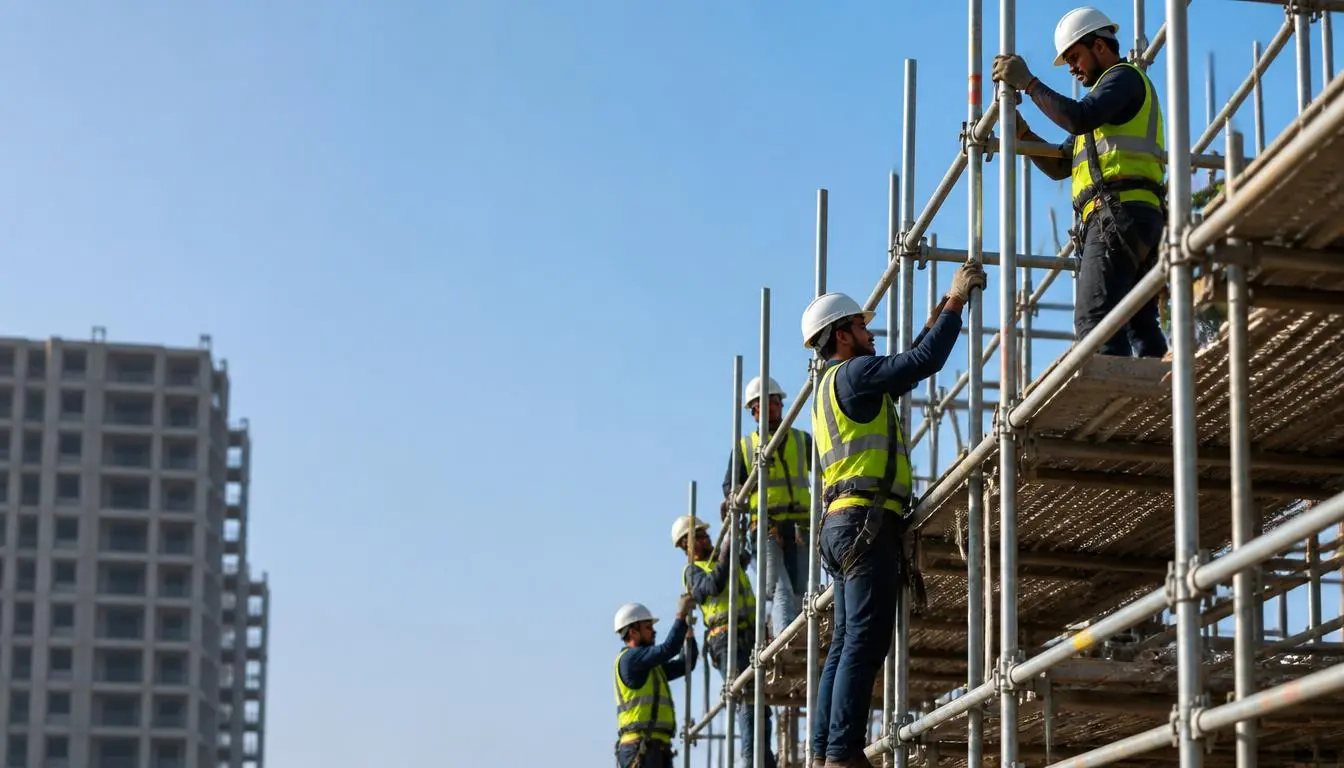
On any major construction site in Bengaluru, labor is the most unpredictable cost variable on your balance sheet. While your material rental rates stay completely fixed, the speed at which your crew handles scaffolding erection and dismantling dictates your true operational margins. Poorly managed rigging teams lead to structural bottlenecks that keep masonry, painting, and glazing crews waiting on the ground. Maximizing your scaffolding labor productivity Bangalore requires a shift from simple supervision to precise workflow synchronization. By calculating real output targets, optimizing ground-to-tier hand-offs, and avoiding common field mistakes, you can significantly trim your project’s total man-hours. This guide delivers actionable strategies to accelerate your assembly cycles, eliminate crew downtime, and protect your bottom line. Benchmarking Output: Tracking Scaffolding Labor Productivity in Bangalore To manage a staging team effectively, you must replace vague guesswork with objective tracking metrics. In the local infrastructure and commercial building sectors, the definitive metric for evaluating efficiency is man-hours per tonne. Tracking how many hours a standard crew takes to safely handle a single tonne of steel ensures your project stays closely aligned with its projected financial targets. When using a standard scaffolding rental calculation in Bangalore to estimate project costs, labor should be budgeted against clear output benchmarks. If your tracking indicates a sudden spike in man-hours on a specific block, the root cause is rarely the physical capability of the workers. Instead, it typically points to a failure in material delivery or an unorganized staging area that forces riggers to waste valuable time hunting for components. Calculating Erection and Dismantling Time Targets Establishing real erection and dismantling time calculation for scaffolding models depends heavily on the specific system deployed on your site. For instance, traditional tube-and-clamp setups generally demand 12 to 16 man-hours per tonne due to the intensive labor required to manually torque individual couplers. Conversely, modern modular systems drastically reduce these targets: Scaffolding System Type Average Erection Target (Man-Hours/Tonne) Average Dismantling Target (Man-Hours/Tonne) Traditional Tube & Clamp 14 Hours 9 Hours Modular Cuplock System 6 Hours 4 Hours By tracking these operational cycles weekly, site engineers can isolate exactly which structural blocks are underperforming and adjust crew allocations before delays compromise the secondary trades. The Two-Zone Workflow: Eliminating Vertical Hand-off Bottlenecks The single largest driver of lost labor time on a high-rise build is the vertical transit bottleneck. Left to their own devices, unmanaged scaffolding crews will often attempt to carry individual pipes up a structural frame one by one. This unorganized approach leads to immediate crew fatigue and leaves high-altitude riggers waiting around idly for materials. To stabilize your scaffolding team efficiency, implement a strict Two-Zone Workflow: [Ground Crew: Log & Pass] ──(Vertical Staging Chain)──> [Upper Tier Crew: Secure & Fix] The Ground Crew (The Passers): Positioned exclusively in the staging yard. Their sole responsibility is sorting components, tracking inventory, and hitching bundled loads to rope lines or material hoists. The Upper Crew (The Fixers): Stationed permanently on the active tier. They never descend to fetch parts; their focus remains entirely on receiving materials and locking connections. This division of labor leverages the massive engineering advantages of modern equipment. For example, the cuplock scaffolding advantages in Bangalore are fully realized when your upper crew can rapidly lock nodes down with simple mallet strikes while a steady, synchronized stream of components moves up from the ground. Managing Fatigue and Climate Shifts in Bengaluru Job Sites Maintaining high-velocity rigging targets requires a practical approach to worker welfare, especially given the micro-climate shifts across Bengaluru’s construction belts. While the city generally enjoys moderate weather, afternoon temperatures during the summer months or the heavy humidity preceding monsoon downpours can severely drain physical stamina. When managing skilled scaffolding riggers in Bengaluru, failing to account for heat exhaustion or sudden downpours triggers a sharp drop-off in late-afternoon output. Schedule intense vertical lifting runs for the cooler early-morning windows between 08:00 AM and 11:30 AM. Additionally, ensure that structured hydration breaks are strictly enforced to maintain steady focus and prevent safety errors caused by physical exhaustion. The Structural Dismantling Sequence: Speed Without Sacrificing Control Dismantling a structural framework is inherently more hazardous than building it. A common, highly damaging field error on local sites is allowing crews to drop components directly onto the ground from high tiers to speed up a tear-down. This shortcut leads to immediate component warping, thread damage on jacks, and high replacement penalties that completely invalidate your initial savings. A high-productivity dismantling workflow relies on a strict reverse-assembly sequence: Step 1: Clear the Debris: Remove all loose building materials, tools, and mortar deposits from the platform boards before unlinking a single pipe. Step 2: Top-Down Removal: Dismantle the structure strictly layer by layer from the top tier downward. Never attempt to remove lower tie-ins or bracings prematurely to clear paths. Step 3: Controlled Lowering: Lower all components down to the ground crew utilizing hand-lines or material hoists. Once grounded, materials must move directly to sorting bins to avoid cluttering the exit gates. Enforcing this systematic approach keeps your components intact, protects your crew, and ensures your final return invoices remain free from unexpected fees. You can minimize these risks by reviewing the most common scaffolding rental mistakes in Bangalore with your crew leaders before teardowns begin. FAQs: Optimizing On-Site Crew Output What is the ideal crew size for a standard double-pole setup? For a standard double-pole layout, an optimized team usually consists of 5 to 6 trained riggers: two workers managing the ground sorting and rigging, two workers passing materials vertically, and two expert fixers securing the active upper tier. Scaling beyond this size without adding clear intermediate staging paths often creates a layout bottleneck where workers crowd each other out. How do sub-contracted crews impact site compliance timelines? If you hire an unverified independent scaffolding contractor Bangalore, they may lack formal training in modern safety standards. This can lead to compliance delays during site inspections. Always verify that your assembly sub-contractors hold recognized safety certifications and understand local municipal height