Advanced Infrastructure Scaffolding: Engineering Solutions for Bangalore’s Mega Projects
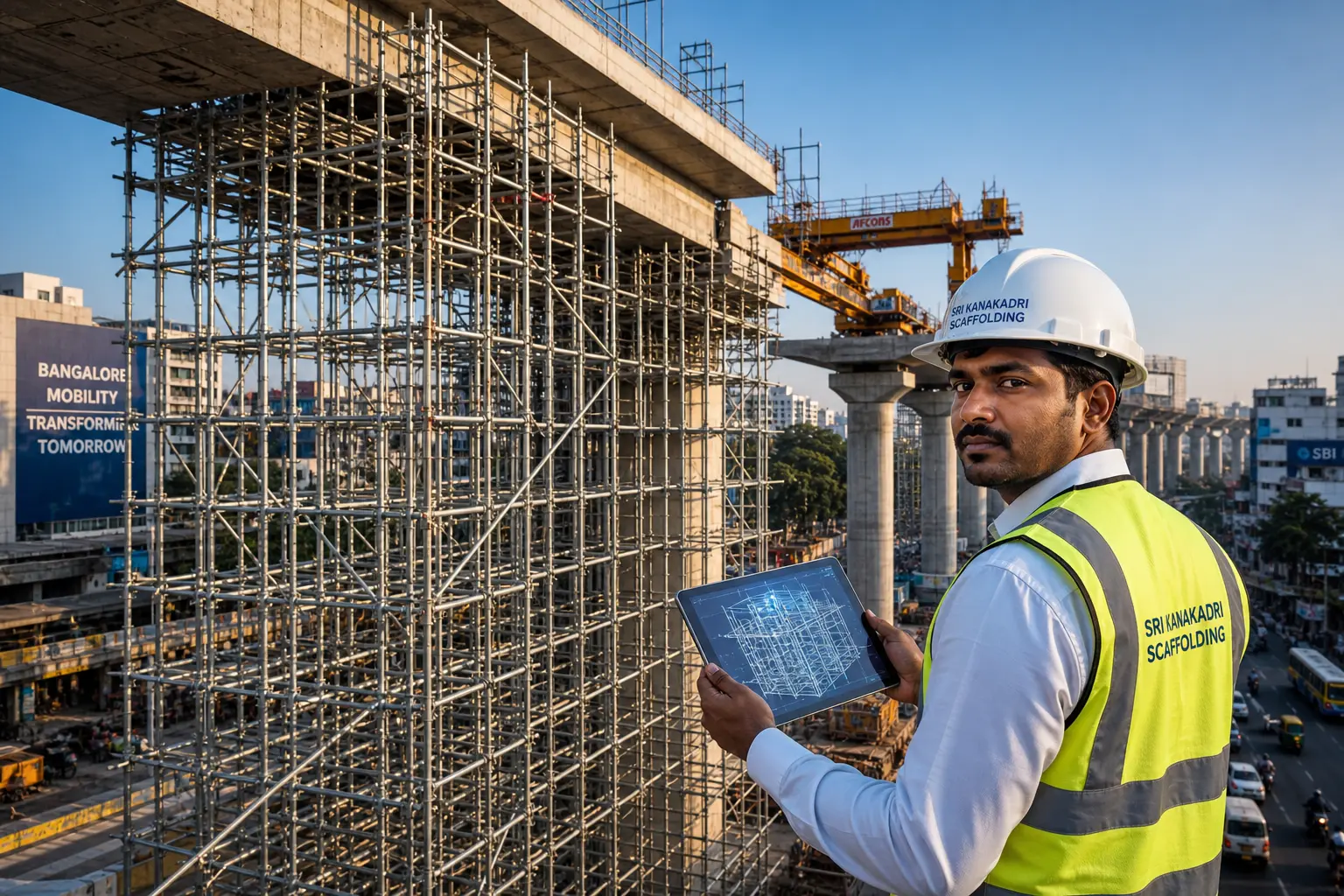
Bangalore’s skyline in 2026 is moving fast. From the massive stretches of the Peripheral Ring Road to the high-tech station boxes of Namma Metro Phase 3, construction here has shifted from simple building to complex engineering. For project managers on the ground, the priority isn’t just renting pipes; it’s finding infrastructure scaffolding Bangalore solutions that can handle massive weight and strict safety rules. This guide looks at the engineering behind these mega projects. We’ll see how specialized shoring and customized scaffolding design keep our flyovers and metro lines moving. Whether you are dealing with a government tender or a multi-crore civil project, getting these technical details right is the only way to keep your site safe and efficient. Infrastructure vs. Commercial Scaffolding: Defining the Engineering Gap Standard scaffolding for an apartment block is mostly for worker access—giving people a place to stand while they paint or fix windows. Infrastructure projects are different. In civil engineering, the scaffold often acts as the primary structural support. This is the “Engineering Gap.” If you’re working on a high-rise in Vijayanagar, you need people to move easily. But if you’re supporting a metro girder, you need heavy-duty shoring that won’t budge under pressure. Infrastructure scaffolding solutions have to handle “live loads” that standard systems can’t touch. When you’re casting a bridge deck, the scaffold holds the weight of wet concrete, steel rebar, and the heavy vibration of machinery all at once. This is why most big projects have moved away from basic H-frames to cuplock scaffolding systems. Their unique locking mechanism makes them much stiffer and better at spreading weight evenly. Unlike smaller sites, mega projects also need a lot of paperwork. You can’t just “put up” a scaffold; you have to assemble an engineered system backed by civil engineering specs and load certificates. In this world, a 1% error in where a pole is placed can cause a structural tilt. Key Insight: In infrastructure, the scaffold is the temporary foundation of the building. Picking a system based on “access” rather than “load capacity” is a dangerous mistake. Solving Complexity for Bangalore’s Elevated Corridors and Flyovers Bangalore is currently being rebuilt with elevated corridors that run for kilometers through some of the busiest parts of the city. Providing scaffolding for bridge construction Bangalore is a massive challenge because you’re often working right over moving traffic or very close to homes. Heavy-Duty Shoring Systems for Bridge Deck Support The hardest part of building a bridge is casting the deck. You need heavy-duty shoring systems India that can hold the “dead load” of concrete until it dries and becomes strong enough to stand on its own. For projects near the Vijayanagar elevated roads, we use high-tensile steel and girder support frames. Everything has to be perfectly level so the weight is spread across the whole span. For these roads, the shoring also has to fight sideways forces, especially when heavy pre-cast segments are being moved into place. We use special bracing and adjustable screw jacks to keep everything steady. This precision prevents the bridge deck from sagging or cracking while it cures. Precision Scaffolding for Namma Metro Rail Expansion The Namma Metro Phase 3 expansion has even stricter rules. As metro rail scaffolding contractors, we focus on station-box builds and tunnel portal support. Being near live metro tracks means everything has to be vibration-resistant. If a train rumbles past and a bolt loosens, the whole structure could be at risk. We use rigid portal frames and locking systems that stay put even with constant ground shakes. Whether we are supporting a station facade or helping with overhead electrical lines, the scaffolding plan is built right into the Metro’s master blueprints. This keeps the project on track without breaking the 2026 safety mandates in Bangalore. Key Insight: Flyover and Metro jobs need a “dynamic safety strategy.” You have to plan for traffic, ground shakes, and massive weight all at the same time. The Math Behind the Metal: High-Load Capacity and Stress Analysis In this type of engineering, weight matters more than height. If you’re supporting a 50-tonne bridge piece, you need mathematical proof that your scaffold will hold. High-load capacity scaffolding starts with a stress analysis, where we test every part of the system against its Safe Working Load (SWL). To meet BIS 2750 compliance, we use a safety factor of 4:1. This means the scaffold is designed to hold four times the weight we actually expect to put on it. We look at the steel grade, how far apart the poles are, and even how fast the wind blows in that part of Bangalore. Customized Scaffolding Design and Blueprint Integration Infrastructure projects need a customized scaffolding design that starts on day one. Using CAD software, we make sure the scaffold doesn’t just “fit” the site but actually helps the work happen faster. If a bridge girder is being slid into place by a machine, the scaffold has to stay out of the way while still being strong. This also affects how we check the site. A heavy-duty system has to be watched daily. Every plan we make comes with a daily scaffolding inspection checklist. This is how we make sure nothing has moved or weakened after a long day of work. Future-Proofing Bangalore: Scaffolding for 2026-2030 Mega Projects Bangalore’s growth is only speeding up. The city is focused on massive projects like the Peripheral Ring Road (PRR) and the Satellite Town Ring Road (STRR). These require a level of logistics we haven’t seen before. The demand for infrastructure scaffolding Bangalore is moving toward modular shoring that can be used over many kilometers. Large projects like the Airport expansion need huge structures that standard rentals just can’t handle. To meet these deadlines, contractors need partners who can provide massive amounts of certified gear that follows all 2026 safety mandates in Bangalore. On these giant sites, being able to move and rebuild shoring quickly allows for a “rolling” schedule. This is vital when the work moves several