Green, Yellow, or Red? Decoding the Scaffolding Tagging System for Site Safety
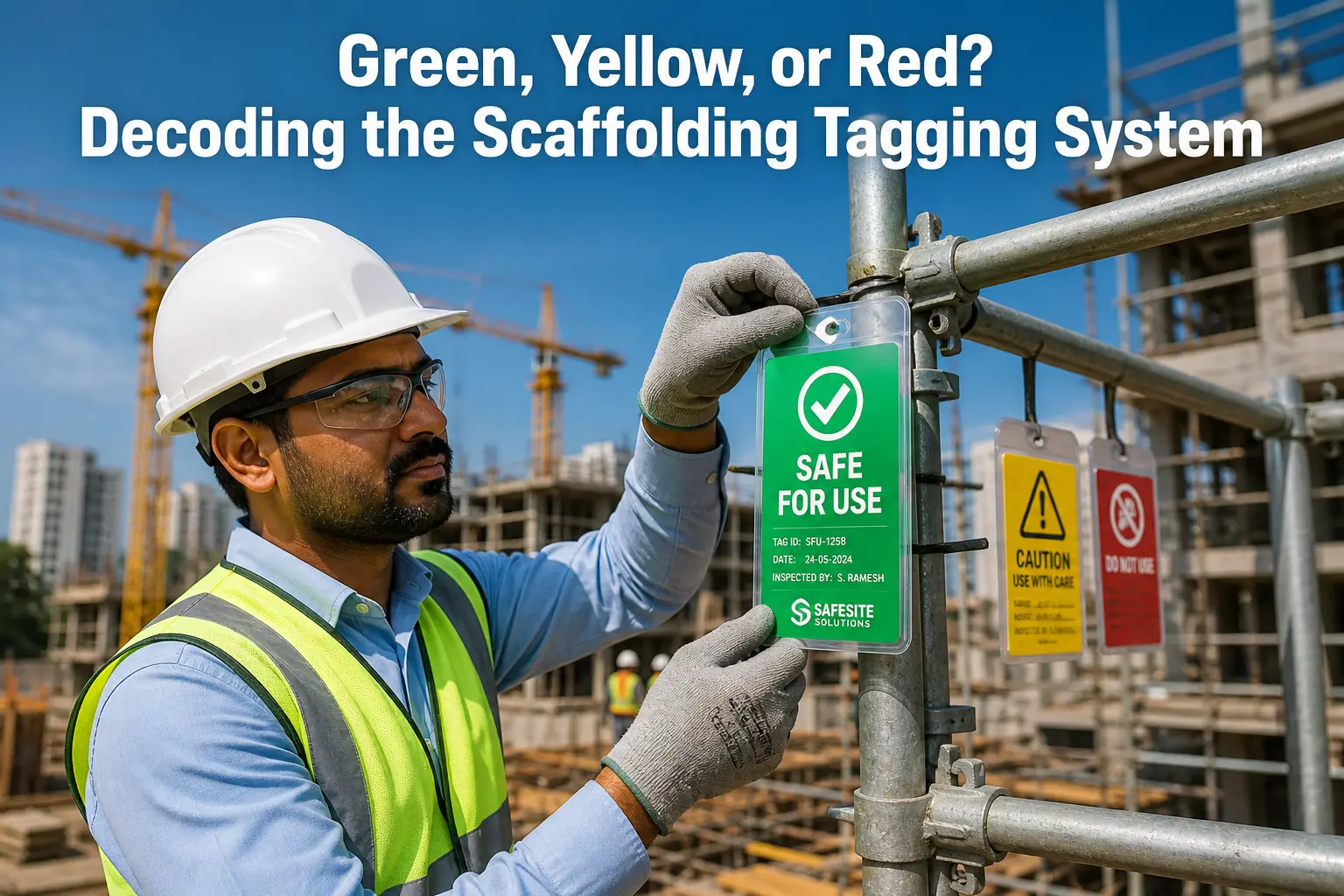
Imagine a worker standing at the base of a high-rise scaffold in a bustling construction zone in Bangalore. In the noise and chaos of a busy morning, they have only a split second to decide if that structure is safe to climb. A standardized scaffolding tagging system removes the deadly guesswork from that decision. By using a universal color-coded language, these tags communicate critical safety information at a glance. This guide decodes the system to help site supervisors and workers ensure total compliance and zero accidents on-site. The Psychology of Color: Why Scaffolding Tags Save Lives In the high-pressure environment of a construction site, visual communication is often more effective than verbal instructions. The scaffolding tag colors meaning is rooted in basic human psychology—red means stop, green means go, and yellow signals caution. On a site with hundreds of workers, some of whom may speak different languages, these tags act as a “silent supervisor.” They provide a constant, unwavering safety warning that transcends language barriers and loud machinery. Implementing this visual communication isn’t just about following a trend; it is a vital part of risk prevention. When a worker sees a tag, their brain instantly categorizes the level of danger. In 2026, where Bangalore construction projects are moving at an incredible pace, especially in developing hubs like Vijayanagar, following the latest 2026 safety mandates in Bangalore is essential. There is no room for “assuming” a structure is safe. A missing tag or a faded sign is a massive red flag that can lead to catastrophic falls or structural collapses. Using these tags effectively creates a culture of safety awareness. It forces a moment of pause and verification before anyone sets foot on a platform. For site supervisors, it’s the most efficient way to track which sections of a complex scaffold have been inspected and which are still “under construction” or currently being modified. Key Insight: Scaffolding tags turn a complex safety audit into a simple, three-color visual signal that every worker on-site can understand instantly. The Three-Color System: Decoding Green, Yellow, and Red The three-color scaffolding tagging system is the global standard for height safety. It provides a clear, physical record of the scaffold’s status that cannot be ignored. In 2026, Bangalore site inspectors look for these tags immediately upon entering a site. If a tag is missing or outdated, it is treated as a major safety breach. Green Tags: Safe for Use A scaffolding green tag meaning is simple: “Go.” It indicates that the structure has been fully inspected by a competent person and is 100% safe for work. This tag must be updated every 7 days (or after bad weather). It contains the certified assembly details, the date of the last inspection, and the maximum load-bearing capacity (SWL) of the platforms. Yellow Tags: Caution / Under Construction The yellow scaffolding tag meaning is often misunderstood. It does not mean the scaffold is safe; rather, it indicates the structure is currently being modified, dismantled, or built. Yellow tags are used for specialized access only. Only the scaffolding crew wearing full fall-protection gear should be on a structure marked with yellow. Red Tags: Danger – Do Not Use A scaffolding red tag meaning is a complete prohibition. If you see a red tag, it means the structure has failed an audit, is structurally unsound, or has been damaged. It is a “Danger” sign that prevents unauthorized access. In 2026, ignoring a red tag is a dismissible offense on most professional sites in Bangalore. Who Can Sign the Tag? The Role of the ‘Competent Person’ A scaffolding tag is only as reliable as the person who signs it. In the eyes of the law and according to the latest 2026 safety mandates in Bangalore, a tag is not valid unless it is signed by a “Competent Person.” This individual isn’t just any worker; they are someone with the specific technical training and site experience required to identify existing and predictable hazards. On most sites, the authorized scaffolding inspection is the responsibility of the safety officer or a senior site supervisor. Their safety officer duties involve a physical walkthrough of the entire structure to verify that every ledger, standard, and brace is correctly placed. They are the final gatekeeper of the daily scaffolding inspection checklist, ensuring that the theoretical safety of the design matches the reality of the build. Key Insight: Never let a general laborer or a helper sign a scaffolding tag. The signature must belong to an appointed Competent Person who understands the legal weight of that status. Placement and Maintenance: Where Should the Tag Go? A safety tag is only useful if it is seen before a worker begins their climb. Correct scaffolding tag placement ensures that the visual warning is impossible to miss. According to BIS safety standards, every scaffold must have a designated tag holder permanently fixed at the primary access points. For most structures, this means placing the tag at eye-level right next to the main ladder entries. If a scaffold is large and has multiple entry points, each separate access ladder should have its own status tag. The tag should be housed in a durable, weather-resistant holder that protects the card from the sun and rain. In Bangalore’s intense afternoon heat, non-UV protected tags can fade within days, making the critical information—like the inspection date—unreadable. Common Mistakes in Scaffolding Tagging Even with a clear system, complacency often leads to scaffolding safety mistakes that put the entire crew at risk. One of the most frequent errors is the “stale tag.” According to safety norms, a green tag is only valid for a maximum of 7 days. Many supervisors forget to re-inspect and update the card, leaving an outdated date on the holder. Another issue is the “Ghost Signature.” This happens when a tag is signed, but the specific data—such as the maximum weight capacity—is left blank. Additionally, in the dusty and sunny climate of Bangalore, faded tags are a major concern. A dirty tag is